
Dry Cutting vs Wet Cutting Diamond Blades When using diamond blades, contractors often ask whether they should cut wet or dry. The answer depends on the material, the saw, and the jobsite conditions. Wet Cutting Wet cutting uses water to cool the blade and control dust. Benefits include: Wet cutting is commonly used with: Dry… Continue reading Dry Cutting vs Wet Cutting Diamond Blades
Category: Diamond Blades Basics
From Troubleshooting to reviews, common jobsite issues with Diamond Blade selection to fixes
How to Tell When Your Diamond Blade Is Worn Out
How to Tell When Your Diamond Blade Is Worn Out Diamond blades are built for tough cutting—concrete, asphalt, block, pavers, stone, and even reinforced materials. But no matter how good the blade is, every diamond blade eventually wears out. The problem is that many contractors keep using a blade long after it has stopped performing… Continue reading How to Tell When Your Diamond Blade Is Worn Out
Why Diamond Blades Glaze and Stop Cutting Concrete
Understanding why this happens can save time, money, and frustration on the jobsite.
Sharpening Diamond Blades: Quick and Easy Guide
The good news is sharpening a diamond blade is extremely simple and usually takes less than a minute on the jobsite.
Why Your Diamond Blade Is Cutting Slow
Signs of a glazed blade include:
Why Asphalt Blades Outperform Concrete or General-Purpose Blades
Asphalt Blade vs Concrete / General-Purpose Blade – The Bottom Line
Multi-Purpose Diamond Blade for Asphalt, Concrete & Rebar: The Contractor’s ROI Guide
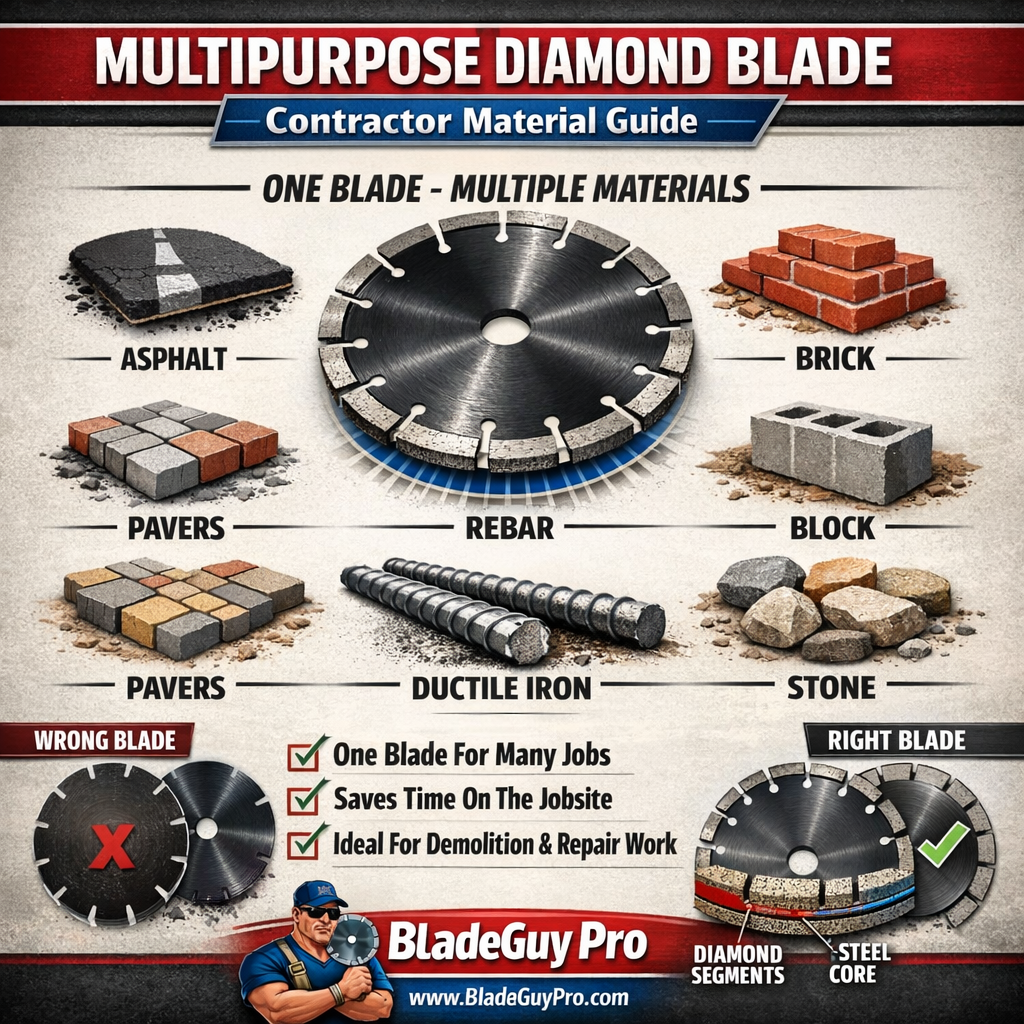
If you’re switching blades three times on the same job, you’re losing money.