One of the biggest misconceptions about diamond blades is that once they stop cutting, they are worn out. In reality, most diamond blades don’t need to be replaced—they just need to be sharpened.
The good news is sharpening a diamond blade is extremely simple and usually takes less than a minute on the jobsite.
Here’s how contractors do it.
First: Diamond Blades Don’t Actually “Dull”
Unlike traditional cutting tools, diamond blades do not become dull in the normal sense.
A diamond blade cuts because industrial diamonds embedded in the segment grind through the material. As the blade cuts, the metal bond holding the diamonds slowly wears away, exposing new sharp diamonds.
When the bond stops wearing properly, the diamonds become trapped inside the segment. This condition is called blade glazing, and it’s the main reason blades stop cutting.
When this happens, the blade simply needs to be dressed (sharpened).
The 60-Second Sharpening Method
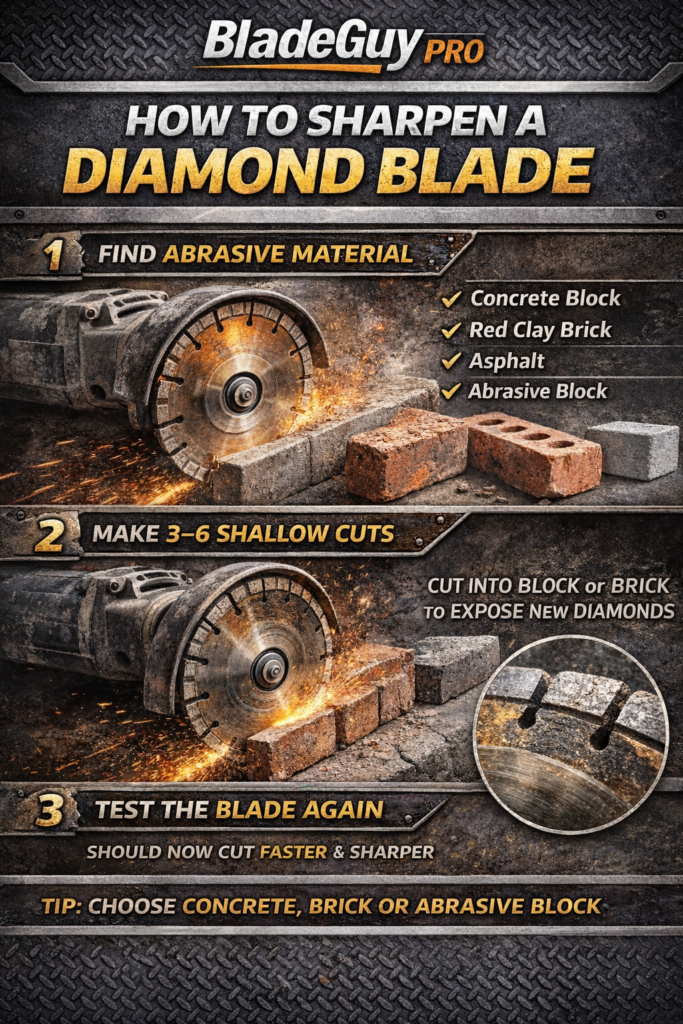
Sharpening a diamond blade is called dressing the blade, and the process is simple.
Step 1: Find an Abrasive Material
You need a material that will wear the metal bond slightly to expose new diamonds.
Common materials contractors use include:
- Concrete block
- Asphalt
- Soft brick
- Dressing stone
Concrete block is one of the most common materials used on jobsites.
Step 2: Make a Few Short Cuts
Make 3–5 shallow cuts into the abrasive material.
This quickly wears away a thin layer of the bond and exposes fresh diamonds.
You’ll usually notice the blade start cutting aggressively again almost immediately.
Step 3: Return to Your Original Material
After dressing the blade, return to cutting your original material.
In most cases, the blade will cut like new again.
Signs Your Diamond Blade Needs Sharpening
You may need to dress your blade if you notice:
- Cutting speed suddenly slows down
- You need to apply extra pressure to the saw
- Segments appear smooth or shiny
- The blade feels like it’s “rubbing” instead of cutting
- Excess heat during cutting
These are classic signs of blade glazing.
Why Blades Glaze
Glazing usually happens when the bond is too hard for the material being cut.
Examples include:
- Using a hard asphalt blade on hard concrete
- Using a general-purpose blade on very dense material
- Running the blade too slowly
- Excessive heat buildup
When the bond doesn’t wear properly, fresh diamonds cannot be exposed.
Pro Contractor Tip
Many experienced contractors keep a concrete block in the truck specifically for dressing blades.
It’s one of the fastest ways to restore cutting performance without replacing the blade.
A quick dressing cut can often save hundreds of dollars in blades over time.
When Sharpening Won’t Work
Dressing the blade will not help if:
- The segments are worn almost to the core
- Segments are missing
- The blade core is warped or cracked
- The blade is the wrong type for the material
In these cases, replacing the blade is the safest option.
Final Thoughts
Diamond blades rarely stop cutting because they are worn out. Most of the time the blade has simply become glazed.
By dressing the blade with an abrasive material, you can expose fresh diamonds and restore cutting performance in about 60 seconds.
Understanding this simple trick can keep your blades cutting faster, reduce downtime, and save money on the jobsite.
BladesGuy Pro Info that makes you better