How to Tell When Your Diamond Blade Is Worn Out
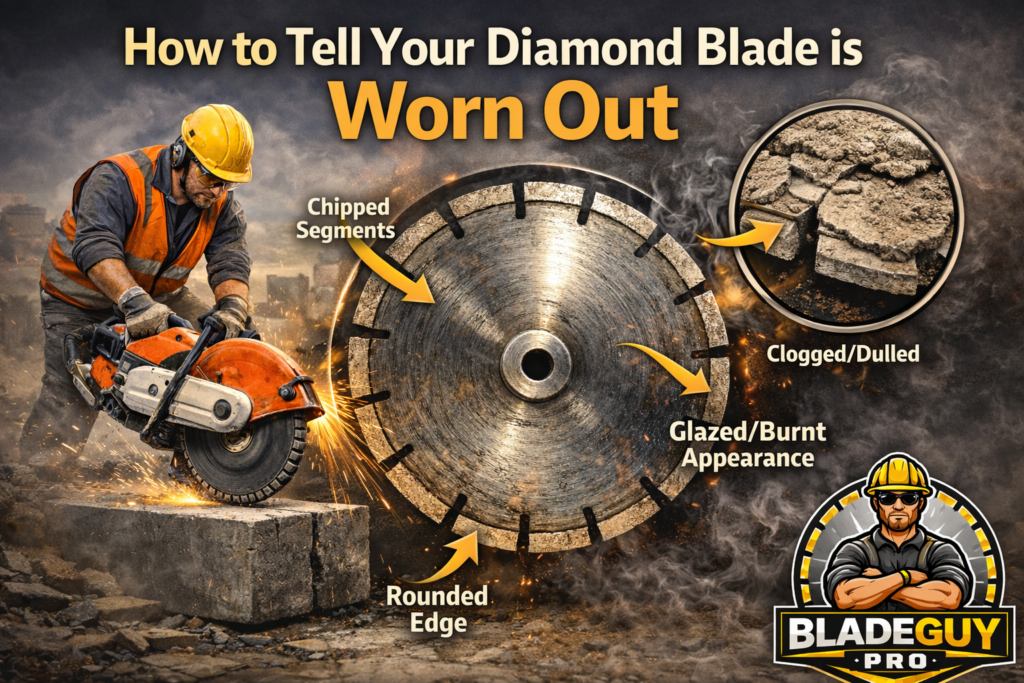
Diamond blades are built for tough cutting—concrete, asphalt, block, pavers, stone, and even reinforced materials. But no matter how good the blade is, every diamond blade eventually wears out.
The problem is that many contractors keep using a blade long after it has stopped performing efficiently. This slows down cutting, overheats equipment, and can even create safety risks.
Knowing when a blade is truly worn out helps you maintain cutting speed, reduce frustration, and avoid damaging your saw.
Here are the key signs to watch for.
⸻
1. The Diamond Segment Is Nearly Gone
The most obvious indicator is segment height.
Diamond blades cut using the raised segments on the rim of the blade. As the blade works, the diamonds wear down and the segment gradually gets shorter.
Most new blades start with 10mm–12mm segment height. When the segment becomes very small, the blade is nearing the end of its life.
Signs of worn segments include:
• Very thin diamond rim
• Segment close to the steel core
• Uneven or rounded segment edges
Once the segment is nearly gone, the blade will lose cutting performance quickly.
⸻
2. Cutting Speed Has Slowed Down
A worn blade doesn’t cut like it used to.
If you notice that:
• Cuts take significantly longer
• The blade struggles to stay in the cut
• You need to apply much more pressure
…it’s often a sign that the diamonds have worn down or been lost from the bond.
Diamond blades are designed to expose fresh diamonds as they cut. Once those diamonds are gone, the blade simply can’t grind material effectively anymore.
⸻
3. The Blade Is Burning or Overheating
When a blade wears out, it often generates excessive heat.
This can show up as:
• Burn marks on concrete or stone
• Sparks when cutting certain materials
• Discoloration on the steel core
• A strong hot-metal smell
Heat builds up because the blade no longer has enough diamond exposure to cut efficiently.
Running an overheated blade too long can damage both the blade and the saw.
⸻
4. The Blade Starts Wobbling
A worn blade may begin to vibrate or wobble during cutting.
This can happen if:
• Segments wear unevenly
• The steel core becomes stressed from heat
• The blade has been pushed too hard during its life
A wobbling blade creates rough cuts and increases the chance of segment breakage or blade failure.
If the core is warped or unstable, it’s time to retire the blade.
⸻
5. The Blade Is Cutting Smooth Instead of Aggressive
Diamond blades should grind material aggressively.
When worn out, the blade may feel like it’s polishing the material instead of cutting it.
You might notice:
• Dust instead of chips
• Very slow progress through the material
• The blade sliding across the surface
At this stage the blade has simply lost its cutting diamonds.
⸻
When It’s Time to Replace the Blade
A blade should be replaced when:
• Segments are nearly gone
• Cutting speed drops dramatically
• The blade overheats easily
• The core becomes unstable
• Cutting efficiency disappears
Continuing to run a worn-out blade wastes time and puts unnecessary strain on equipment.
A fresh blade will cut faster, run cooler, and make cleaner cuts.
⸻
BladeGuy Pro Tip
Sometimes a blade that seems worn out is actually glazed over, not worn out. This happens when the bond becomes too hard and stops exposing diamonds.
You can often fix this by making several cuts in abrasive material like asphalt or a concrete block to expose fresh diamonds.
If performance doesn’t improve after that, the blade has likely reached the end of its life.
⸻
Final Thoughts
Diamond blades are consumable tools, but using them correctly can maximize their lifespan and performance.
Pay attention to the warning signs of wear, and replace blades before they start slowing down your work.
A sharp blade means:
• Faster cutting
• Less strain on equipment
• Safer jobsite operation
And that means better productivity on every job.
⸻
BladeGuy Pro
Real tools. Real jobsite knowledge.