Dry Cutting vs Wet Cutting Diamond Blades
When using diamond blades, contractors often ask whether they should cut wet or dry. The answer depends on the material, the saw, and the jobsite conditions.
Wet Cutting
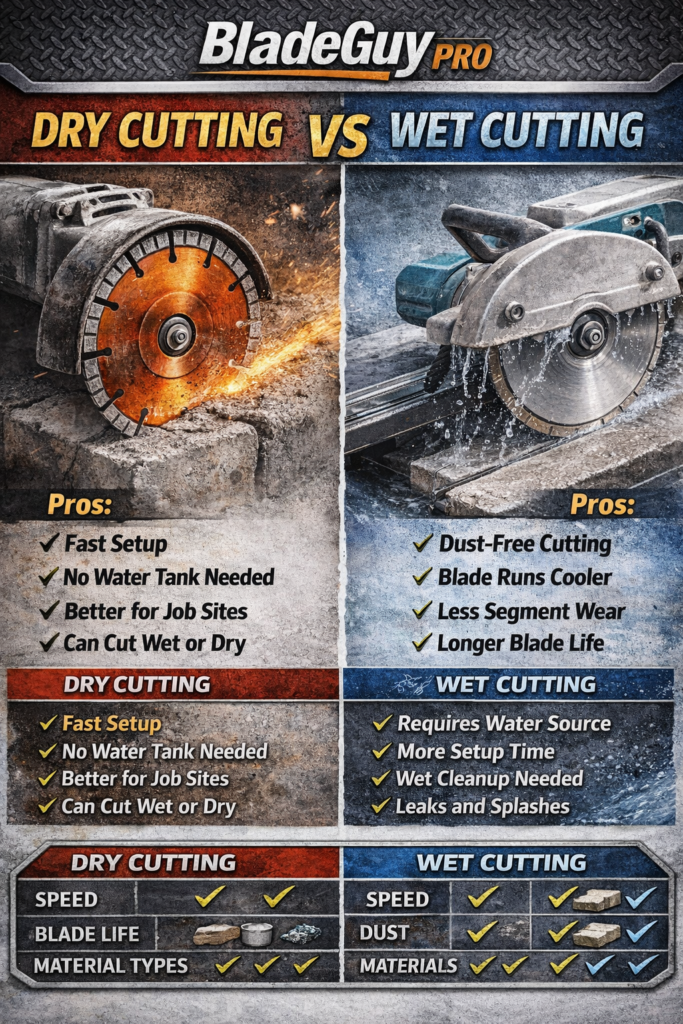
Wet cutting uses water to cool the blade and control dust.
Benefits include:
- Longer blade life
- Less heat buildup
- Reduced silica dust
- Smoother cuts
Wet cutting is commonly used with:
- Concrete saws
- Tile saws
- Masonry saws
Dry Cutting
Dry cutting blades are designed with special segment spacing to allow airflow and cooling.
Benefits include:
- Faster setup
- No water supply required
- Easier jobsite mobility
Dry cutting is common with:
- Handheld saws
- Demo saws
- Small jobsite cutting tasks
Safety Considerations
Dry cutting produces significant silica dust, which can cause serious health problems. Always use:
- Dust control systems
- Respirators
- Proper ventilation
Whenever possible, wet cutting is the safest option.