

Learn the 5 key factors every contractor should know when choosing the right diamond blade for concrete, asphalt, masonry, and tile.
Category: Contractor Cutting Tips
Contractor Cutting Tips
Successful cutting on the jobsite requires more than just the right diamond blade. Contractors who understand proper cutting techniques, saw operation, and blade selection can dramatically improve cutting speed, extend blade life, and produce cleaner results across a wide range of construction materials.
The Contractor Cutting Tips section of BladeGuyPro focuses on practical, real-world advice gained from decades of experience working with diamond blades, concrete cutting tools, tile saws, and masonry equipment. These guides are designed to help contractors avoid common mistakes, improve jobsite efficiency, and get the best performance from their cutting tools.
In this category you’ll learn professional tips for cutting materials such as concrete, asphalt, brick, block, porcelain tile, pavers, granite, and stone. Articles cover topics like proper blade pressure, cooling techniques, cutting depth, preventing blade glazing, avoiding overheating, and choosing the right cutting method for each job.
Whether you’re using a gas cutoff saw, angle grinder, masonry saw, or wet tile saw, these contractor cutting guides will help you improve cutting accuracy, reduce blade wear, and prevent costly jobsite problems.
BladeGuyPro shares proven techniques that contractors can apply immediately in the field. From extending diamond blade life to making faster and safer cuts, these tips are designed to help professionals work smarter and more efficiently on every project.
With more than four decades of experience in the diamond tooling industry, BladeGuyPro provides trusted cutting advice based on real jobsite experience—not theory—so contractors can avoid common mistakes and get the most out of their tools.
🟡 When Buying a Diamond Blade: What Questions You SHOULD Ask (And What Most Salesmen Won’t Tell You)

BladeGuy Pro introduces its bold new Eagle emblem—symbolizing strength, precision, and pro‑grade performance across our cutting‑tool lineup.
STOP WASTING DIAMOND BLADES: The #1 Reason Your Blade Dies Too Early (It’s NOT What You Think)

Most contractors blame the blade — but it’s usually operator technique. Learn the #1 reason diamond blades fail early and how to fix it instantly.
🚫 10 Materials That DESTROY Diamond Blades (And How to Avoid It)
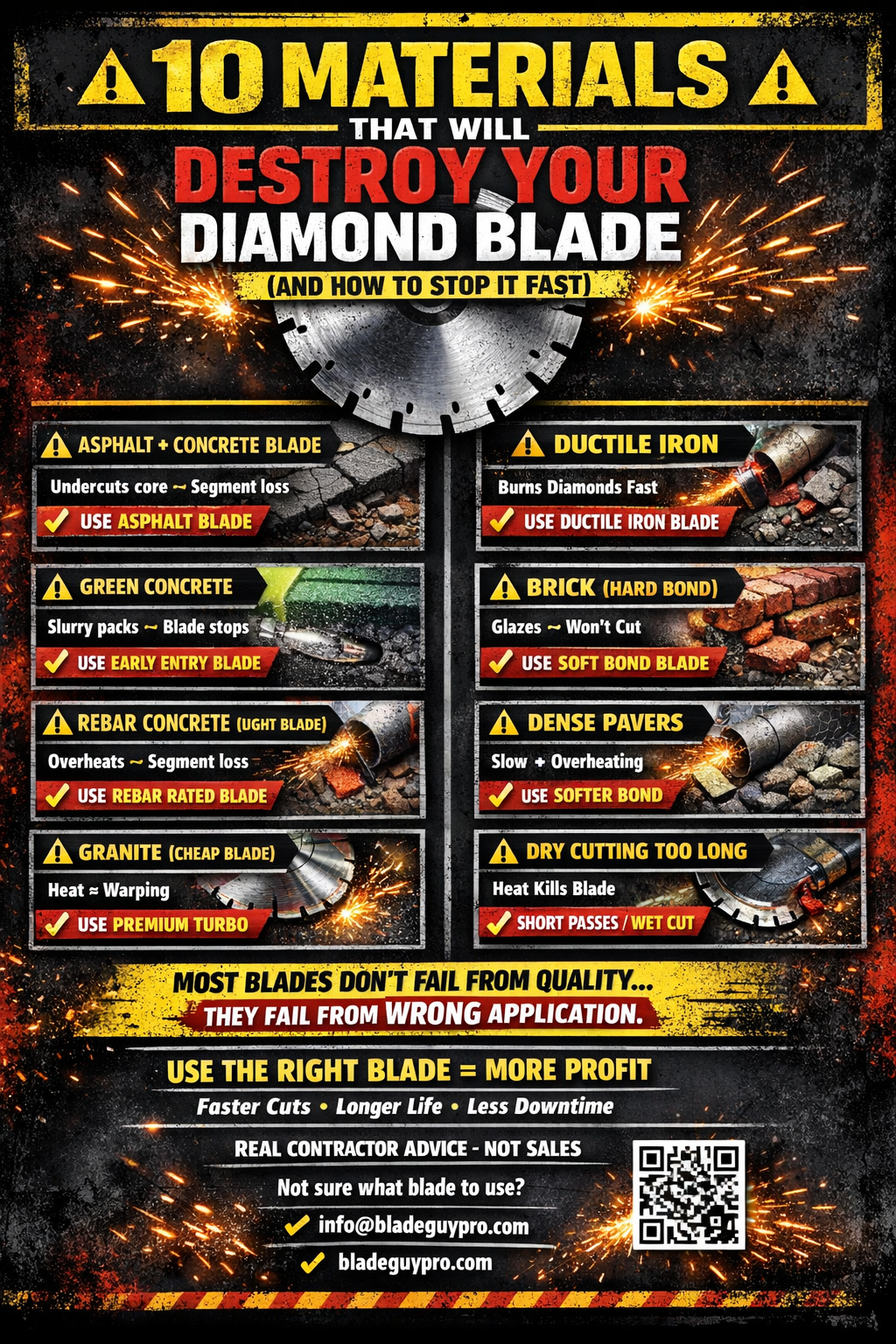
Most diamond blades don’t fail because they’re cheap—they fail because they’re used on the wrong material. Learn the 10 materials that destroy blades and how to avoid costly mistakes on the jobsite.
Why Your Diamond Blade Feels “Slow” (Even When It’s Brand New)

Your diamond blade isn’t worn out — it’s just not performing. Learn the 5 real reasons your blade feels slow and how to fix it fast on the jobsite.
“The Biggest Lie in Diamond Blades: ‘Higher Diamond Concentration = Better Performance’”

Most contractors have heard the sales pitch: “This blade is better because it has more diamonds.” But in real jobsite conditions, that’s one of the biggest myths in the industry. Here’s what actually determines blade performance — and how to avoid wasting money.
The 5 Things Diamond Blade Boxes DON’T Tell You
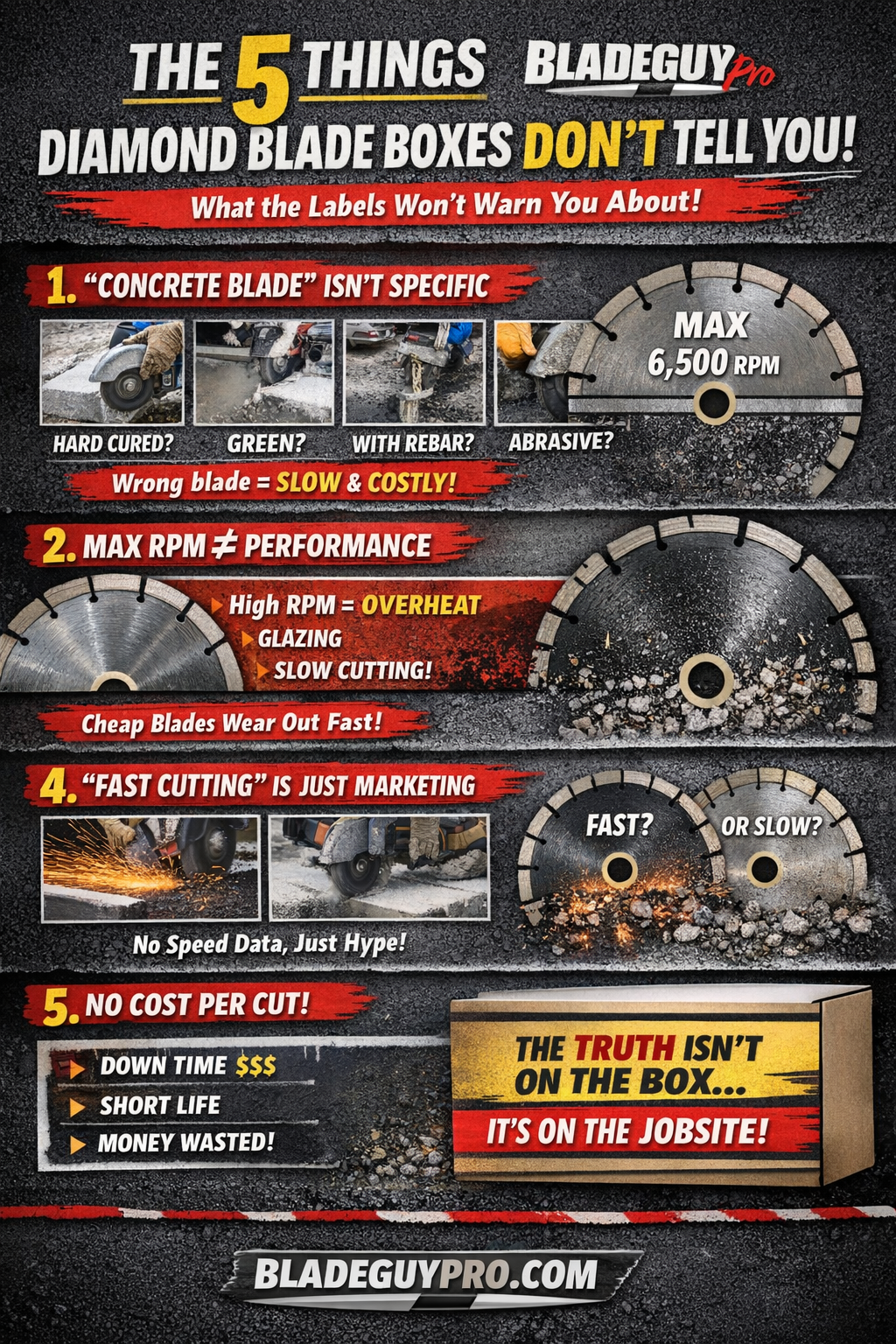
Discover the truth about diamond blade packaging. Learn what blade boxes don’t tell you and how to choose the right blade for faster, more profitable cutting.
What Saw Should You Use? (Contractor Guide to Choosing the Right Cutting Equipment)
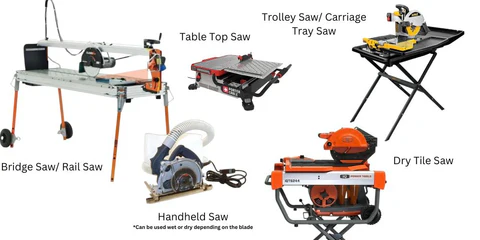
Choosing the wrong saw can ruin even the best diamond blade. This contractor guide breaks down exactly which saw to use for concrete, asphalt, tile, and more—based on 40+ years of real jobsite experience.
Why Diamond Blades Have Directional Arrows
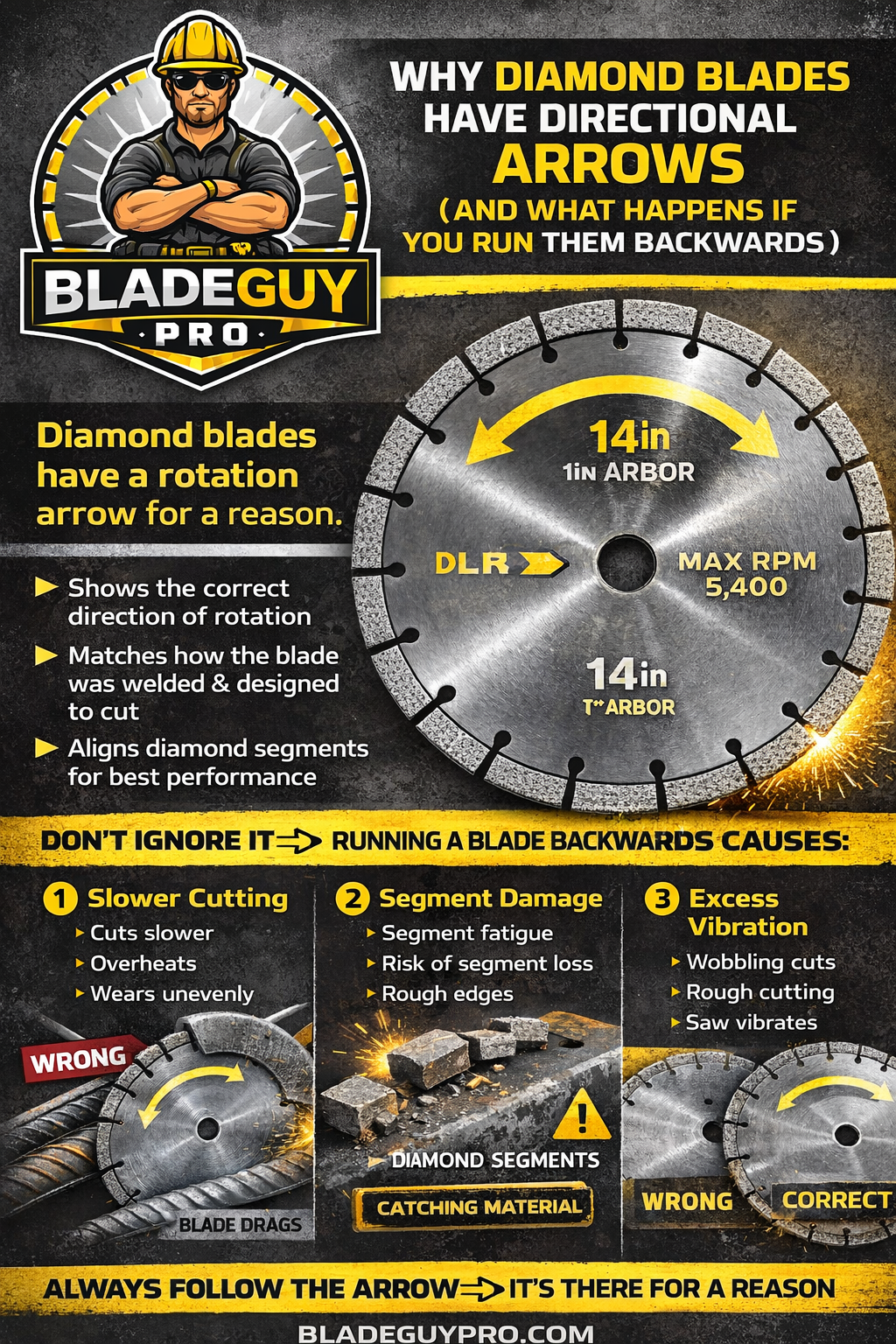
Diamond blades have directional arrows for a reason. Learn what happens if you install a blade backwards and how contractors can avoid common jobsite cutting mistakes.
Essential Guide to Proper Blade Mounting for Contractors
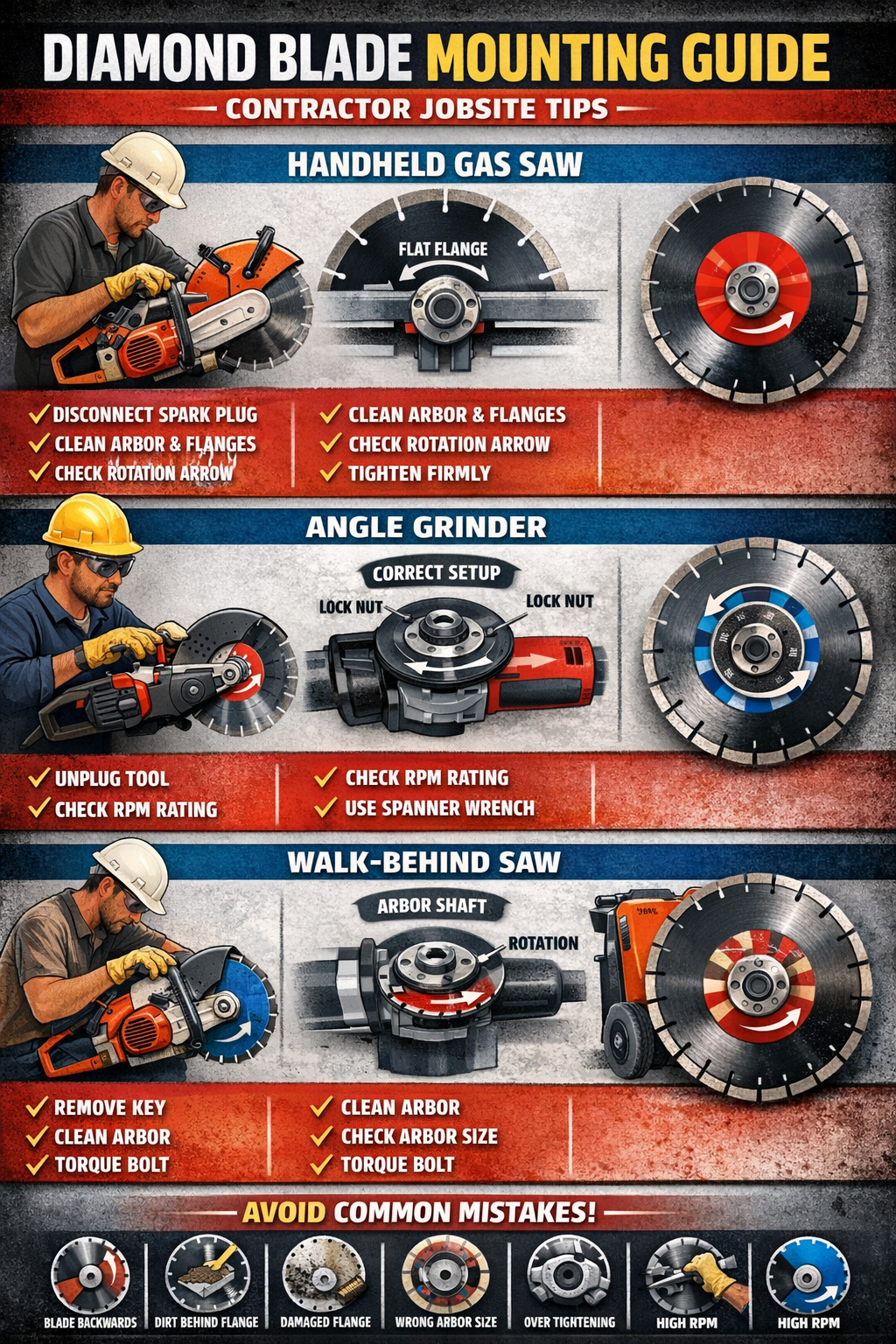
The BladeGuyPro contractor guide highlights common issues with blade mounting on hand-held saws, grinders, and walk-behind saws. Improper mounting often leads to blade wobble and crooked cuts. The guide provides step-by-step procedures for correct blade installation, emphasizing the importance of cleanliness and proper alignment to ensure safety and efficiency in cutting tasks.