
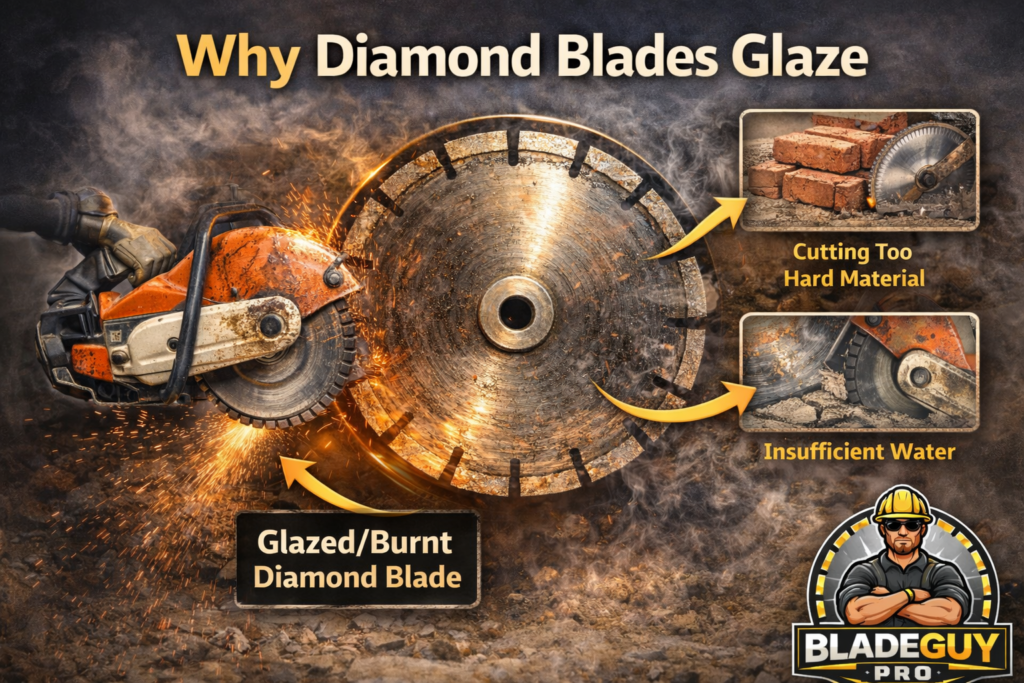
If you’ve ever been cutting concrete and suddenly your diamond blade just stops cutting, you’re not alone. Many contractors assume the blade is worn out or defective, but in most cases the real issue is blade glazing.
Understanding why this happens can save time, money, and frustration on the jobsite.
What Is Blade Glazing?
A diamond blade cuts because exposed diamonds grind away material like concrete, asphalt, or masonry. These diamonds are held in place by a metal bond called the matrix.
As the blade cuts, two things should happen:
- The diamonds wear down.
- The metal bond slowly erodes to expose new sharp diamonds.
When this process stops working properly, the blade becomes glazed.
Glazing occurs when the metal bond wears slower than the diamonds, leaving dull diamonds trapped in the segment. Instead of grinding, the blade simply slides across the surface.
The result:
- Slow cutting
- Excess heat
- Increased vibration
- Frustration on the jobsite
The Most Common Cause: Cutting Material That’s Too Hard
The #1 reason diamond blades glaze is using a blade with the wrong bond hardness for the material.
Concrete varies greatly in hardness. For example:
- Hard cured concrete with river rock aggregate requires a softer bond blade.
- Green concrete or asphalt requires a harder bond blade.
If you use a blade designed for abrasive materials (like asphalt) on hard concrete, the bond will be too hard to wear away, and the blade will glaze.
Other Reasons Blades Glaze
While bond hardness is the main cause, several other factors can contribute.
1. Insufficient Horsepower
If the saw doesn’t have enough power, the blade may not cut aggressively enough to expose fresh diamonds.
2. Cutting Too Lightly
Many operators apply too little pressure. Diamond blades need steady cutting pressure to wear the bond properly.
3. Overheating
Excessive heat from dry cutting or pushing too hard can cause the metal bond to polish over.
4. Cutting the Wrong Material
General-purpose blades sometimes struggle when used on very dense concrete with hard aggregate.
How to Fix a Glazed Diamond Blade
The good news is a glazed blade is usually not ruined. It just needs to be dressed.
To restore cutting performance:
- Make several cuts into an abrasive material such as:
- asphalt
- cinder block
- soft brick
- dressing stone
These materials wear away the metal bond and expose fresh diamonds, bringing the blade back to life.
In many cases, two or three cuts will restore cutting speed.
How to Prevent Glazing
You can avoid glazing problems by following a few simple practices.
1. Use the Right Blade for the Material
Concrete, asphalt, and masonry all require different bond types.
2. Don’t Be Afraid to Apply Pressure
Let the blade work, but maintain steady feed pressure so the bond wears properly.
3. Match the Blade to the Saw
Large saws need blades designed for higher horsepower.
4. Dress the Blade Early
If cutting slows down, dress the blade before it becomes completely glazed.
Final Thoughts
Diamond blades rarely “wear out” suddenly. When a blade stops cutting, the problem is often glazing caused by the wrong bond for the material.
Using the right blade and knowing how to dress it can extend blade life dramatically and keep your cuts fast and efficient.
For contractors, understanding blade performance isn’t just about saving blades — it’s about saving time, reducing labor, and getting the job done right the first time.

1 comment