
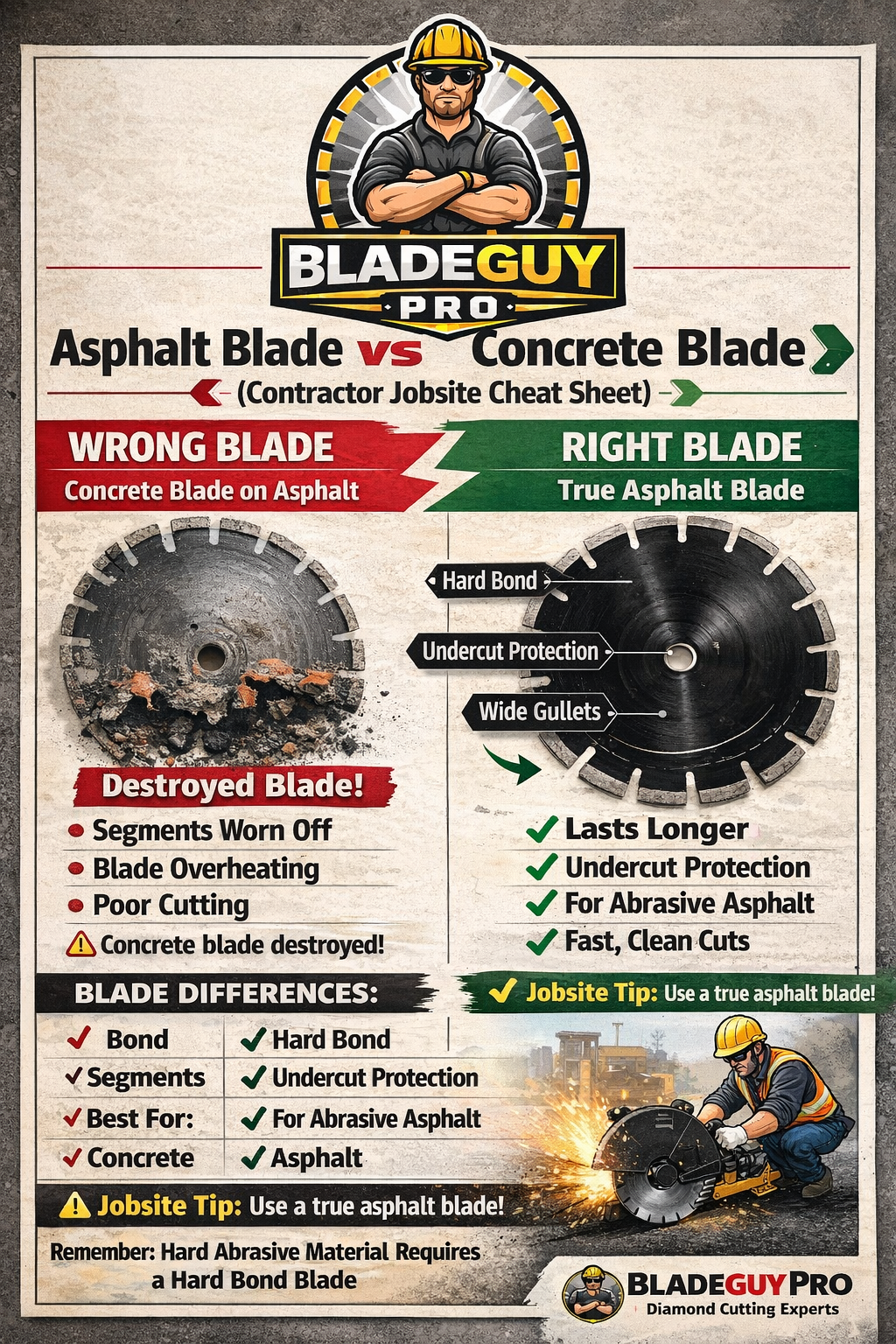
Using a concrete diamond blade to cut asphalt is possible but not advisable. Such blades wear out quickly due to asphalt’s softer, abrasive nature, leading to poor cutting performance. Asphalt requires specially designed blades with harder bonds and protective segments for effective cutting. Investing in the right blade ensures better results and longevity.
Category: CUTTING TECHNIQUE & CONTRACTOR TIPS
Contractor Cutting Tips
Successful cutting on the jobsite requires more than just the right diamond blade. Contractors who understand proper cutting techniques, saw operation, and blade selection can dramatically improve cutting speed, extend blade life, and produce cleaner results across a wide range of construction materials.
The Contractor Cutting Tips section of BladeGuyPro focuses on practical, real-world advice gained from decades of experience working with diamond blades, concrete cutting tools, tile saws, and masonry equipment. These guides are designed to help contractors avoid common mistakes, improve jobsite efficiency, and get the best performance from their cutting tools.
In this category you’ll learn professional tips for cutting materials such as concrete, asphalt, brick, block, porcelain tile, pavers, granite, and stone. Articles cover topics like proper blade pressure, cooling techniques, cutting depth, preventing blade glazing, avoiding overheating, and choosing the right cutting method for each job.
Whether you’re using a gas cutoff saw, angle grinder, masonry saw, or wet tile saw, these contractor cutting guides will help you improve cutting accuracy, reduce blade wear, and prevent costly jobsite problems.
BladeGuyPro shares proven techniques that contractors can apply immediately in the field. From extending diamond blade life to making faster and safer cuts, these tips are designed to help professionals work smarter and more efficiently on every project.
With more than four decades of experience in the diamond tooling industry, BladeGuyPro provides trusted cutting advice based on real jobsite experience—not theory—so contractors can avoid common mistakes and get the most out of their tools.
Essential Guide to Proper Blade Mounting for Contractors
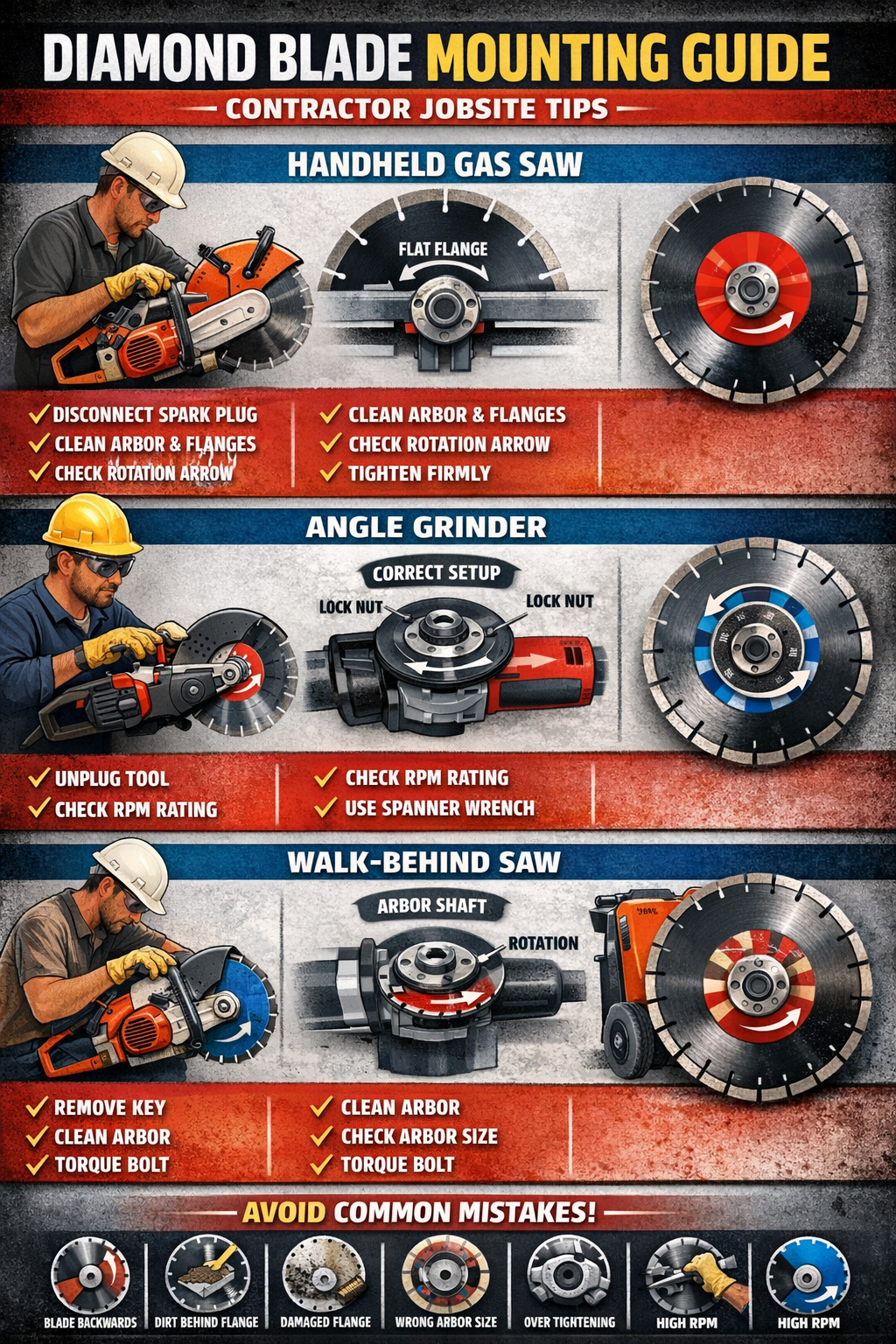
The BladeGuyPro contractor guide highlights common issues with blade mounting on hand-held saws, grinders, and walk-behind saws. Improper mounting often leads to blade wobble and crooked cuts. The guide provides step-by-step procedures for correct blade installation, emphasizing the importance of cleanliness and proper alignment to ensure safety and efficiency in cutting tasks.
Diamond Blade RPM Chart (Contractor Quick Guide)
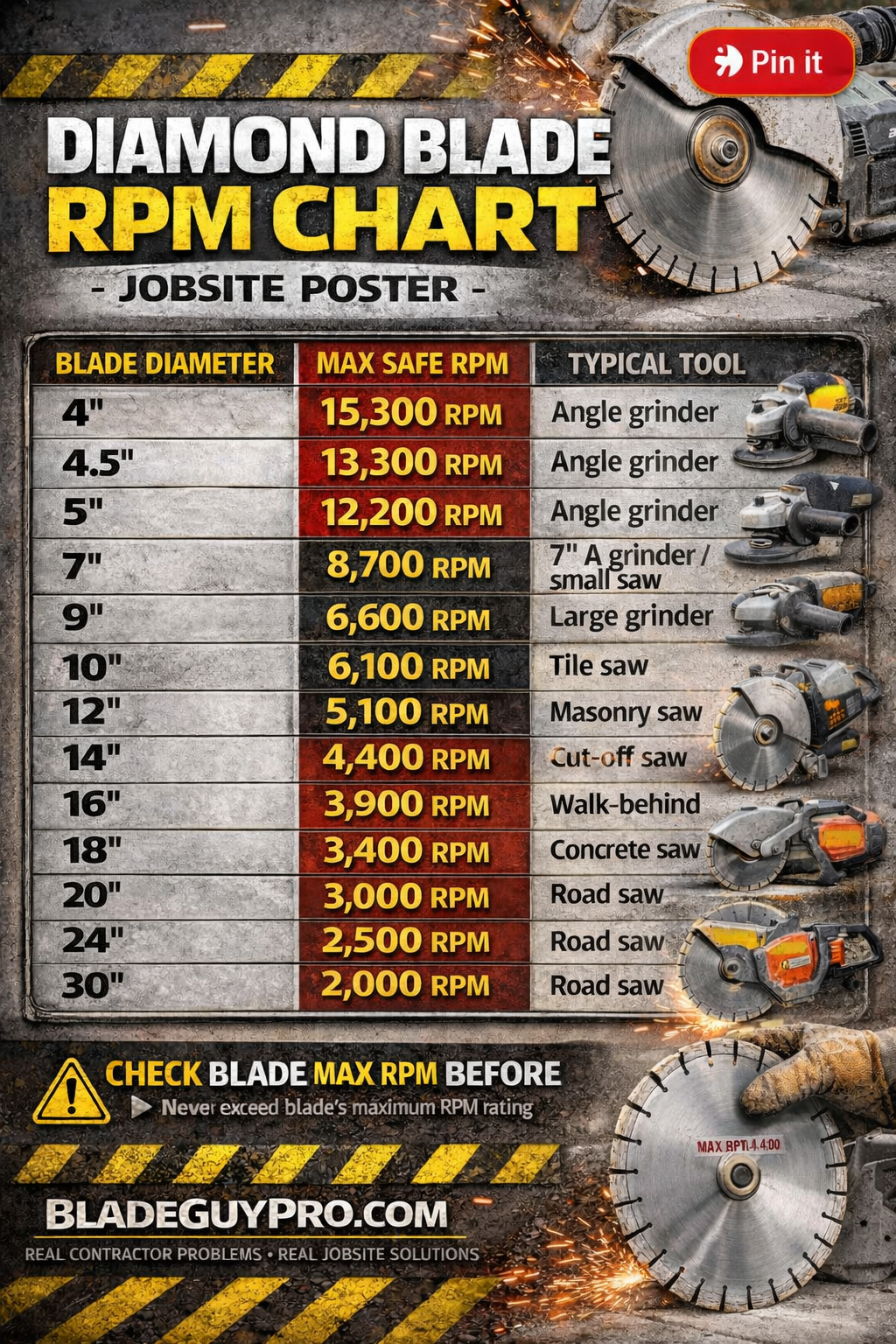
Diamond blade RPM chart for contractors. Learn the correct RPM for angle grinders, masonry saws, and concrete saws to prevent blade failure and improve cutting performance.
Tile Diamond Blades Explained
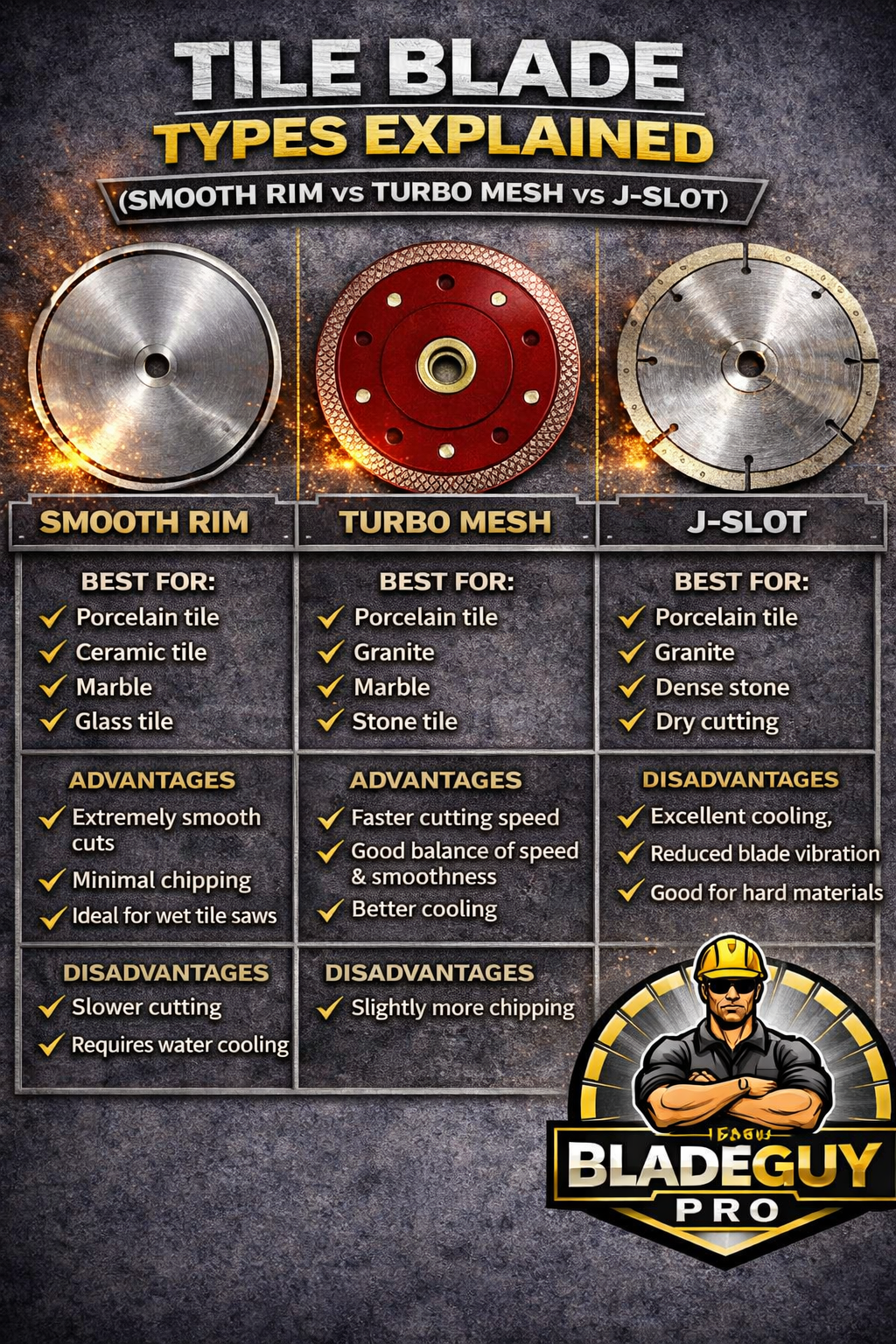
Learn the difference between smooth rim, turbo mesh, and J-slot tile blades. Contractor guide to choosing the right diamond blade for porcelain, ceramic, marble, and granite tile.
How Fast Can You Cut Concrete? (Contractor Jobsite Guide)
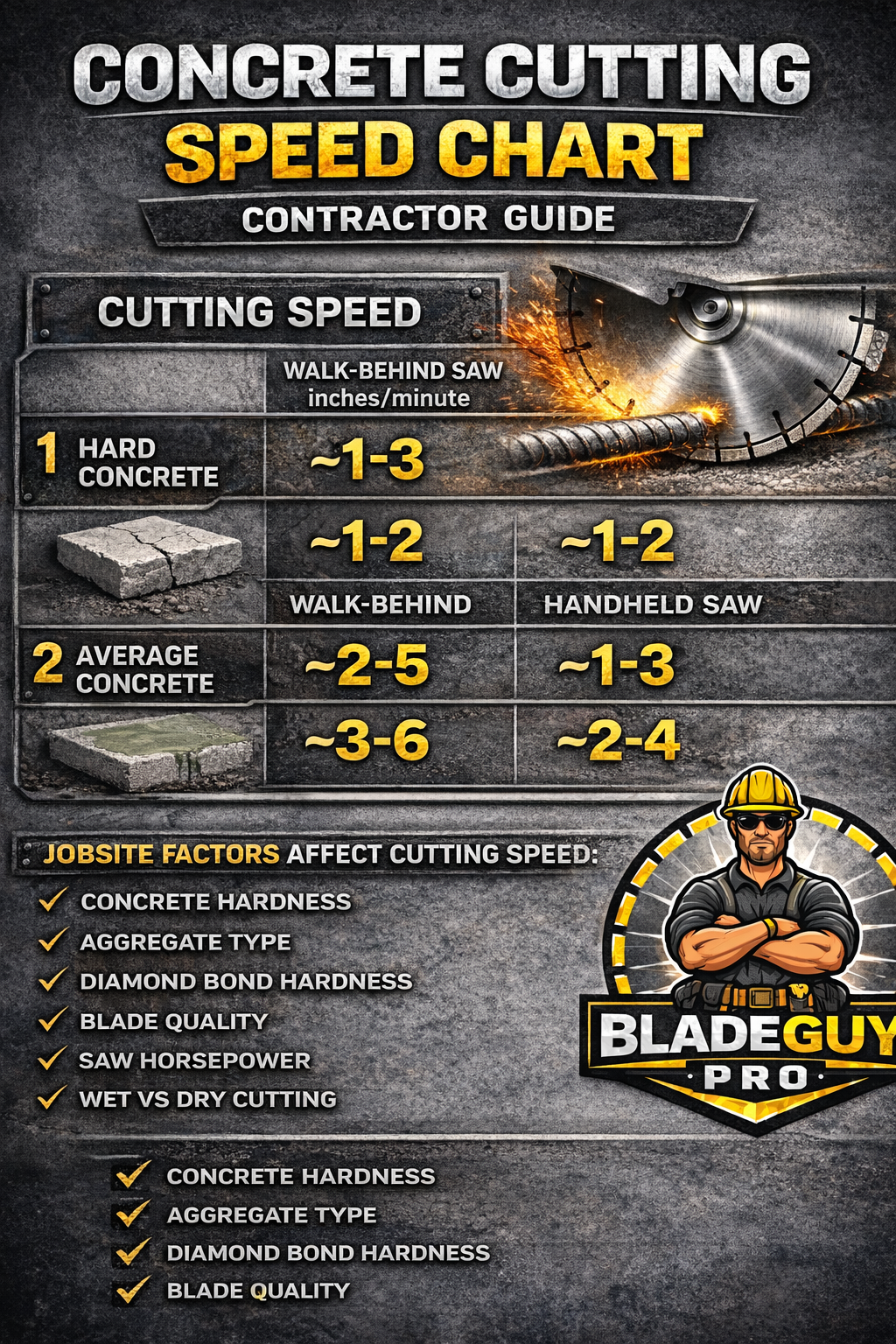
How fast should a diamond blade cut concrete? Learn the real jobsite cutting speeds, what affects blade performance, and how contractors can cut faster without destroying blades.
Can a Diamond Blade Cut Steel, Rebar, or Ductile Iron? (Contractor Jobsite Guide)
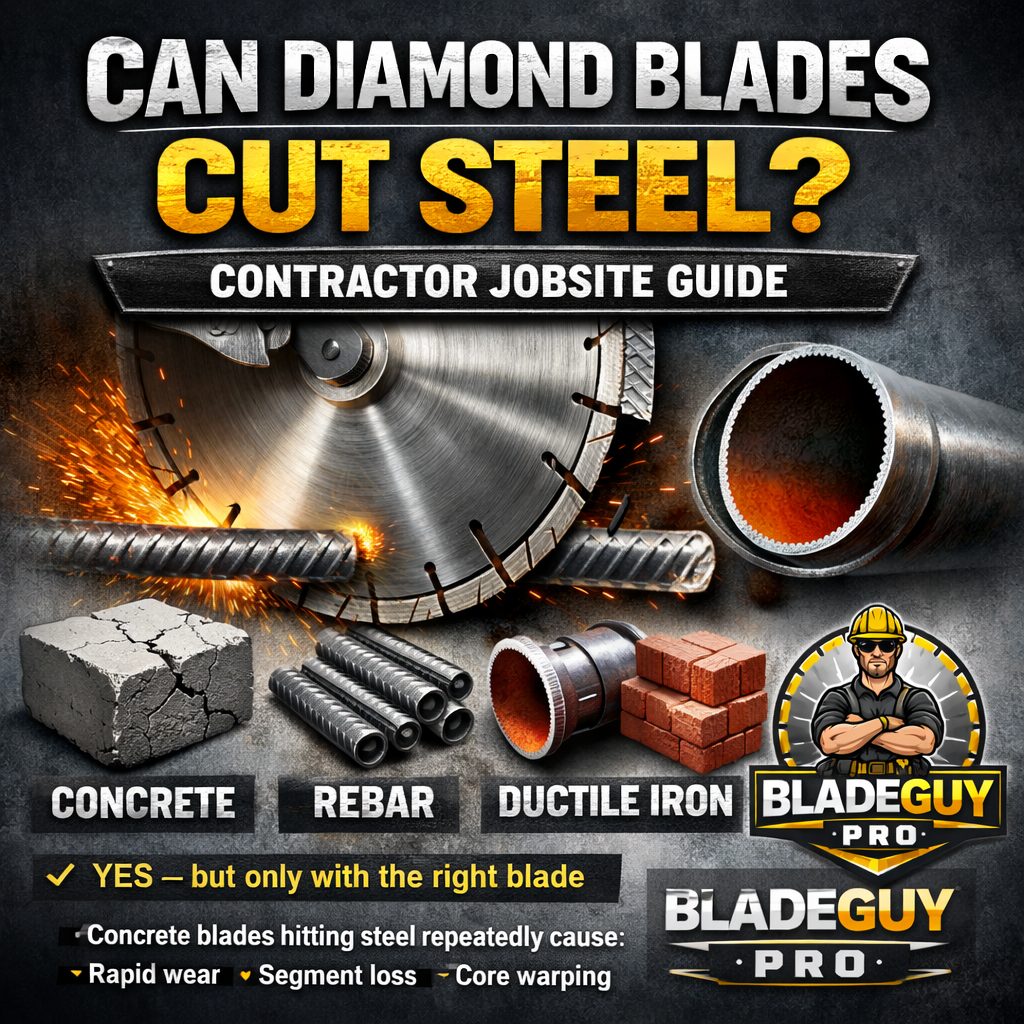
Diamond blades can cut rebar, ductile iron, and even steel- but using the wrong bladecan destroy it in minutes. After 40+ years in the diamond tool industry, BladeGuy explains when diamond blades can cut steel, when they can’t, and how contractors can avoid costly blade damage on the jobsite.
Can You Cut Rebar With a Diamond Blade? (Jobsite Answer)
“Can you cut rebar with a diamond blade?”
Yes — but only with the right blade and the right technique.
Contractor Cutting Techniques That Make Diamond Blades Last Longer
Real Jobsite Cutting Techniques Every Contractor Should Know
How Long Should a Diamond Blade Last? (Contractor Reality Guide)
Well, it depends on the material, the bond hardness, and how the blade is used.
How Deep Should You Cut Concrete? (Contractor Guide)
The Right Cut Depth Can Save Time, Blades, and Labor