
Push too fast and you can destroy a $250 -$1000 diamond blade in minutes.
BladeGuy Pro
After helping thousands of contractors over 40 years in the diamond tool industry, BladeGuy Pro shares real jobsite knowledge about diamond blades, cutting tools, and contractor techniques. One of the most common questions contractors ask on the jobsite is:
“How fast should a diamond blade cut concrete?”
Push too slow and you waste time.
After 40+ years in the diamond tool industry helping thousands of contractors, the real answer is simple:
⚠️ Cutting speed depends on several factors — not just the blade.
Understanding these factors can dramatically increase productivity and extend blade life.
The Short Answer
Under normal conditions:
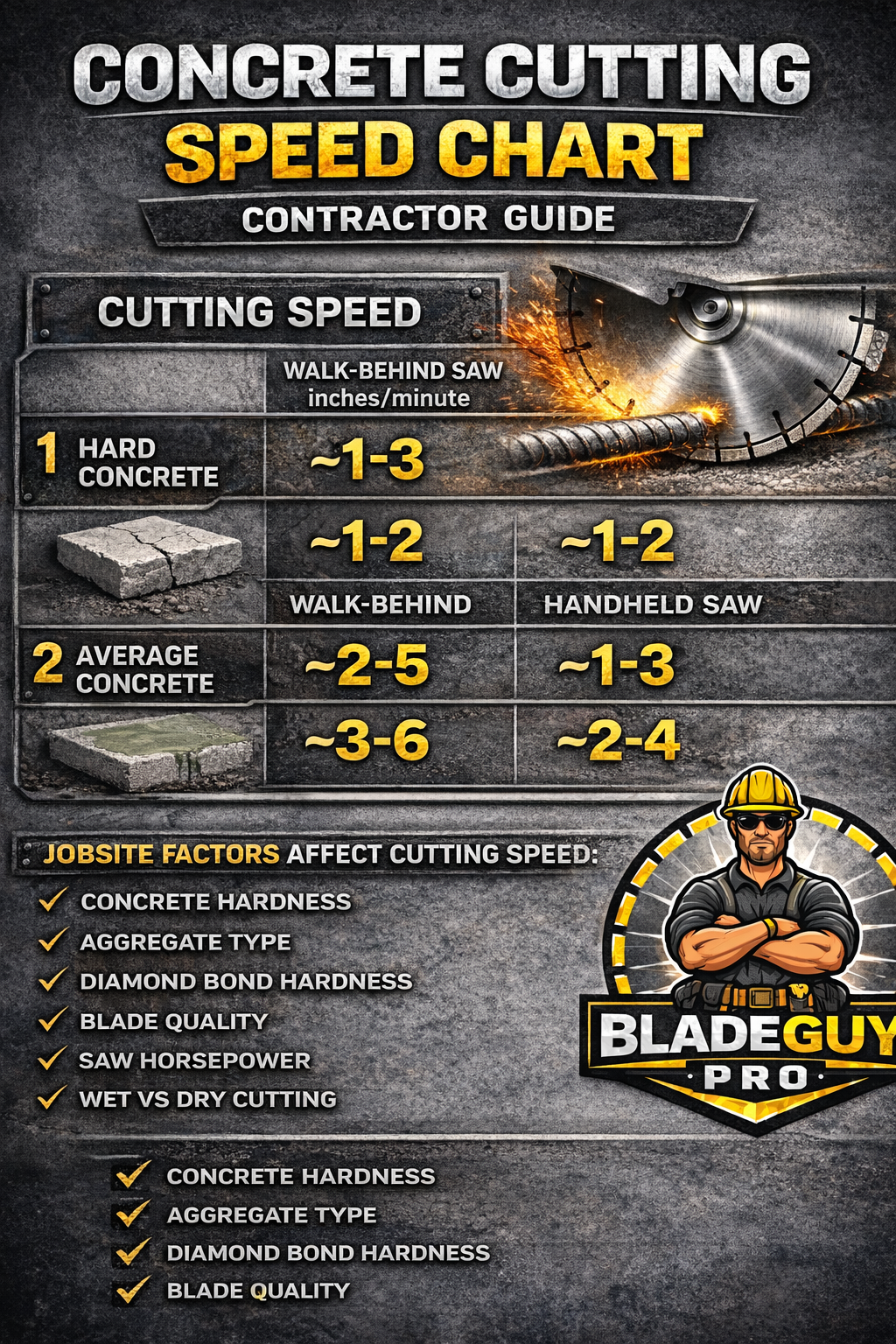
• Walk-behind concrete saws: about 1–3 inches per minute in hard concrete
• Handheld saws: about 1–2 inches per minute
• Soft or green concrete: up to 3–6 inches per minute
But the real cutting speed depends on several jobsite factors.
1. Concrete Hardness
Concrete hardness has the biggest impact on cutting speed.
Hard Concrete (older cured concrete)
Hard concrete contains dense aggregate and is very abrasive.
Result:
• Slower cutting speed
• More blade wear
• Higher heat buildup
Soft Concrete (green concrete)
Fresh or soft concrete cuts much faster.
Contractors can often cut 2–3 times faster in soft concrete than in fully cured concrete.
2. Aggregate Type
Not all concrete is the same.
The type of rock used in the mix dramatically affects cutting speed.
Hard aggregates
• Granite
• Quartz
• River rock
These materials slow cutting speed.
Softer aggregates
• Limestone
• Sandstone
These materials cut faster and are easier on blades.
3. Blade Bond Type
Diamond blades are engineered with different bond hardness.
This determines how quickly new diamonds are exposed during cutting.
General rule:
✔ Hard materials require softer bonds
✔ Soft materials require harder bonds
Using the wrong bond causes:
• glazing
• slow cutting
• premature blade wear
4. Blade Quality
Cheap blades often cut slowly.
Higher-quality blades typically have:
• higher diamond concentration
• better bond formulas
• stronger segment welds
These blades maintain faster cutting speeds and last longer.
5. Saw Power
Saw horsepower has a major effect on cutting speed.
Examples:
• 14″ handheld saw: slower cutting
• 20″ walk-behind saw: faster cutting
• high-horsepower slab saws: fastest cutting
More power allows the blade to maintain proper RPM under load.
6. Wet Cutting vs Dry Cutting
Water greatly improves cutting performance.
Wet cutting advantages
• cooler blade temperature
• faster cutting speed
• longer blade life
• less dust
Dry cutting can still work well, but requires slower feed rates.
Signs You’re Cutting Too Fast
Many contractors try to force the blade.
This causes problems quickly.
Warning signs include:
⚠ excessive sparks
⚠ blade wobble
⚠ burning smell
⚠ slow blade rotation
⚠ segment overheating
If you see these signs, reduce feed pressure immediately.
Signs You’re Cutting Too Slow
Going too slow can also reduce blade performance.
Symptoms include:
• blade glazing
• slow cutting progress
• diamonds becoming dull
Sometimes cutting briefly into abrasive material can expose fresh diamonds and restore cutting speed.
BladeGuy Jobsite Tip
Let the blade do the work.
Many contractors make the mistake of forcing the saw into the cut.
The best technique is:
✔ steady pressure
✔ consistent feed rate
✔ allow the diamonds to grind
Diamond blades cut by grinding, not by forcing.
Final Thoughts
Concrete cutting speed depends on:
• concrete hardness
• aggregate type
• blade bond
• saw power
• cooling method
Understanding these factors allows contractors to cut faster, safer, and more efficiently.
And it prevents the most common mistake I see in the field:
⚠ forcing the blade and destroying it prematurely.
BladeGuy Pro
After helping thousands of contractors over 40 years in the diamond tool industry, BladeGuy Pro shares real jobsite knowledge about diamond blades, cutting tools, and contractor techniques.
