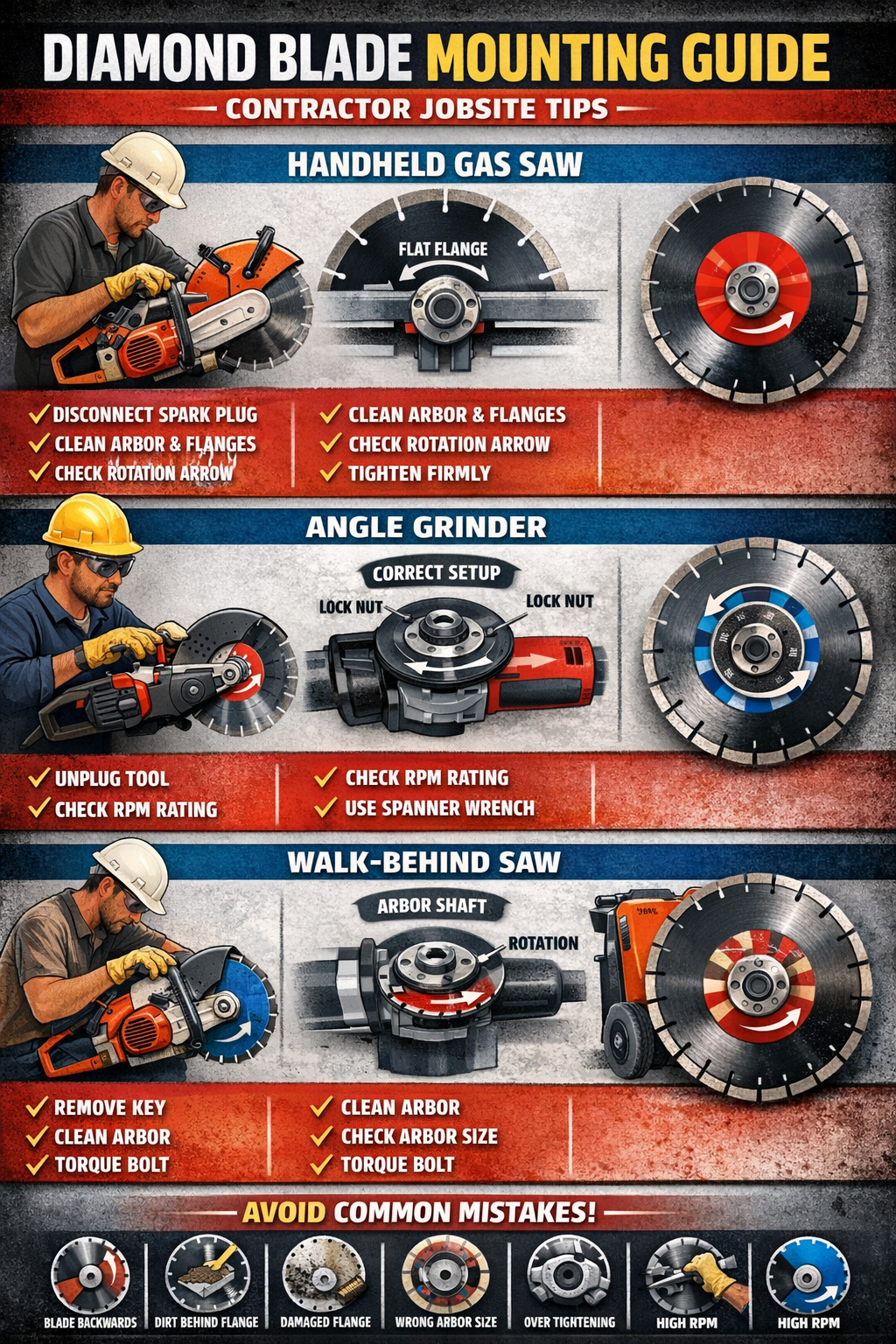
Contractor Guide for Hand-Held Saws, Grinders & Walk-Behind Saws
At BladeGuyPro, one of the most common problems contractors ask about is:

“Why is my blade wobbling or cutting crooked?”
After 40+ years working with diamond tools and helping thousands of contractors, I can tell you the answer is often simple:
bladeguypro.com
⚠️ The blade was mounted incorrectly.
Improper mounting can cause:
- Blade wobble
- Premature segment loss
- Crooked cuts
- Slow cutting
- Dangerous vibration
- Machine damage
The good news: most mounting issues take less than 60 seconds to fix.
Below is the contractor-tested method for properly mounting diamond blades on the three most common machines.
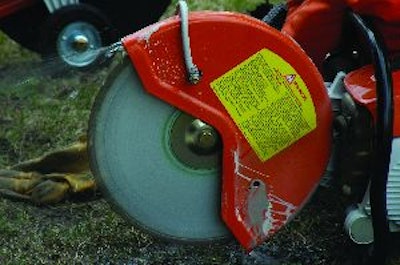
1. Mounting a Blade on a Hand-Held Gas Saw
(Stihl, Husqvarna, Makita style cut-off saws)
4
These saws are commonly used for:
- Concrete cutting
- Asphalt cutting
- Block and brick cutting
- Road work
Proper Mounting Steps
1. Disconnect the spark plug
- Always turn off the saw before touching the blade.
2. Clean the arbor and flanges
- Dirt or slurry trapped behind the blade can cause wobble.
3. Inspect the flanges
- Flanges must be flat and clean.
- Bent flanges cause blade run-out.
4. Check blade rotation direction
- Most diamond blades have an arrow showing rotation.
5. Center the blade on the arbor
- Never force the blade onto the shaft.
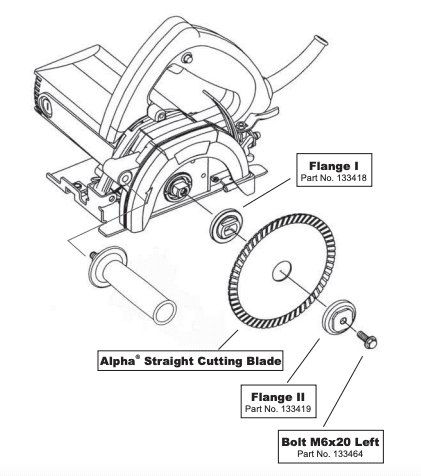
6. Install the outer flange
7. Tighten firmly — not excessively
- Over-tightening can warp the blade core.
Pro Tip from 40 Years in the Industry
Many wobbling blades come from slurry buildup behind the flange, especially when cutting wet concrete.
Cleaning the flanges often fixes the problem quickly.
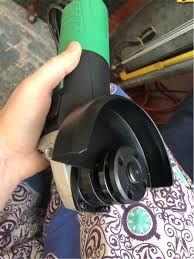
2. Mounting a Diamond Blade on a Grinder
(Angle grinders used for masonry, tile, or concrete)
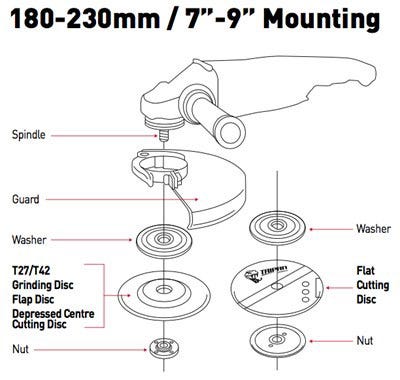
4
Grinders spin much faster than gas saws, often:
8,000 – 12,000 RPM
Because of this, proper mounting is critical for safety.
Correct Mounting Method
1. Unplug or remove the battery
2. Inspect the arbor
- Most grinders use 5/8″-11 arbor
3. Use the correct flange orientation
- Some grinders allow the flange to be reversed for thicker blades.
4. Align the blade rotation arrow
5. Hold the spindle lock while tightening
6. Use the proper spanner wrench
⚠️ Never tighten by hitting the wrench with a hammer.
Grinder Safety Reminder
Grinders produce extremely high RPM.
Always confirm:
- Blade RPM rating exceeds tool RPM
- Blade diameter matches the grinder size
Running the wrong blade on a grinder can be extremely dangerous.
3. Mounting a Blade on a Walk-Behind Concrete Saw
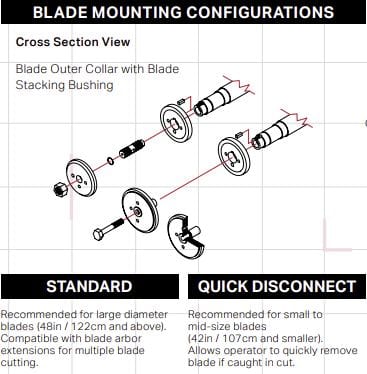
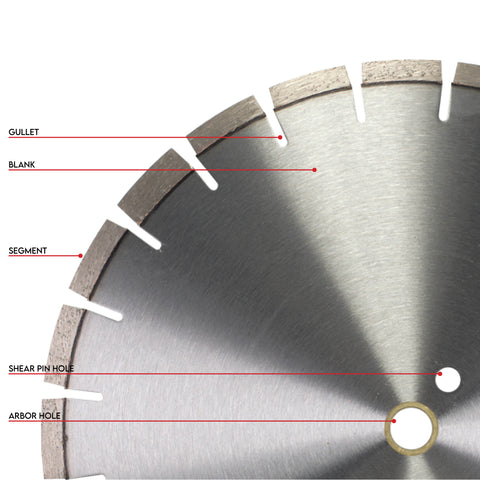
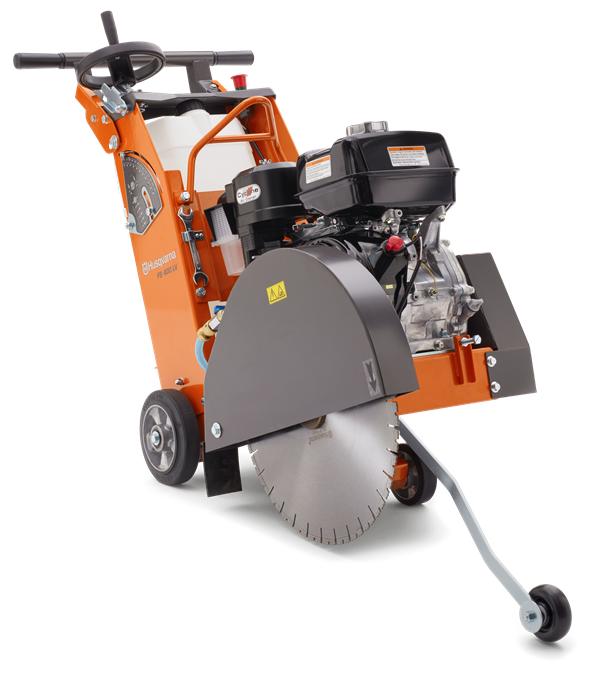
Walk-behind saws are used for:
- Road cutting
- Slab cutting
- Expansion joints
- Asphalt removal
These machines use large diameter blades (12”–36”).
Proper Installation Steps
1. Shut off engine and remove key
2. Clean arbor shaft and flanges
3. Check arbor size
Common sizes:
- 1 inch
- 20 mm
- 25.4 mm
Always use the correct bushing if required.
4. Confirm rotation direction
Walk-behind saws sometimes rotate opposite direction from hand saws.
Always verify the arrow.
5. Install outer flange
6. Tighten arbor bolt securely
Large blades need proper torque, but avoid excessive force.
7 Common Blade Mounting Mistakes Contractors Make
After decades in the field, these are the most common mounting errors I hear about:
1️⃣ Mounting blade backwards
2️⃣ Dirt or slurry behind the flange
3️⃣ Using damaged flanges
4️⃣ Installing blade on wrong arbor size
5️⃣ Running blade over recommended RPM
6️⃣ Overtightening arbor bolts
7️⃣ Using worn adapters or bushings
Even a small mounting issue can cause:
- vibration
- slow cutting
- blade glazing
- premature blade failure
Final Advice from BladeGuyPro
After helping thousands of contractors over 40+ years in the diamond tool industry, one lesson always stands out:
Most blade problems start before the blade ever touches the concrete.
They start with improper mounting.
Take 60 seconds to mount your blade correctly, and you’ll get:
✔ straighter cuts
✔ longer blade life
✔ faster cutting
✔ safer operation

More Contractor Tips
Visit BladeGuyPro for more jobsite guides like:
- Why Diamond Blades Stop Cutting
- How to Sharpen a Diamond Blade in 60 Seconds
- 25 Diamond Blade Mistakes Contractors Make
- Diamond Blade Troubleshooting Guide
- 5 Tips for Selecting the Right Diamond Blade (Contractor Guide 2026)
- 🟡 When Buying a Diamond Blade: What Questions You SHOULD Ask (And What Most Salesmen Won’t Tell You)
- 🛑 STOP CORE BITS FROM GETTING STUCK
- STOP WASTING DIAMOND BLADES: The #1 Reason Your Blade Dies Too Early (It’s NOT What You Think)
- 📝 STOP DRESSING YOUR DIAMOND BLADE WRONG (Why It Still Won’t Cut)
Real jobsite problems.
Real contractor solutions.
✅ Contractor Tip:
If your blade starts wobbling, check the flanges first before blaming the blade.