Yes — but only with the right blade and the right technique.
bladeguypro.com/ or email us at info@bladeguypro.com


The Question Contractors Ask All the Time
On construction sites everywhere, someone eventually asks:
“Can you cut rebar with a diamond blade?”
The short answer is:
👉 Yes — but only with the right blade and the right technique.
Diamond blades are designed primarily for concrete and masonry, but many professional blades are engineered to cut reinforced concrete, which includes steel rebar.
However, cutting rebar incorrectly can quickly destroy a blade.
Let’s break down the jobsite reality contractors need to know.
Why Diamond Blades Can Cut Steel
Diamond blades don’t cut like wood blades. They cut by grinding material away using industrial diamonds embedded in metal segments.
When cutting reinforced concrete:
- Diamonds grind the concrete
- The blade then grinds through the steel rebar
Because steel is much harder than concrete, the blade experiences more heat and wear when hitting rebar.
That’s why blade design matters.
Best Diamond Blades for Cutting Rebar
Not all diamond blades are designed to handle steel.
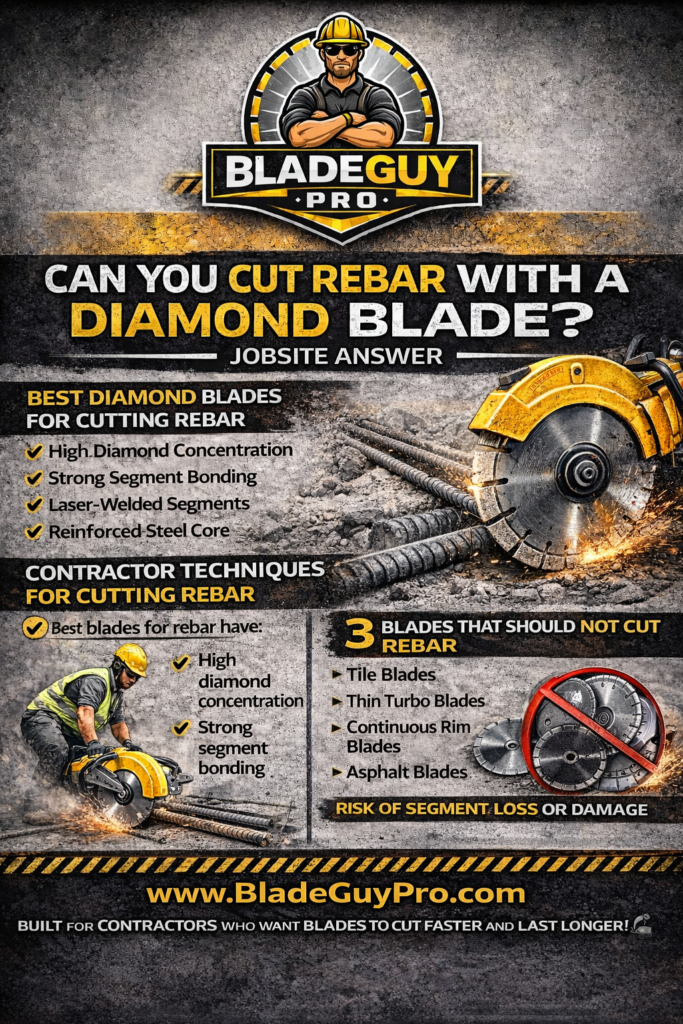
The best blades for reinforced concrete typically have:
✔ High diamond concentration
✔ Strong segment bonding
✔ Laser-welded segments
✔ Reinforced steel core
Blades labeled for:
- Reinforced concrete
- Demolition cutting
- Rescue cutting
are usually built to handle rebar.
Blades That Should NOT Cut Rebar
Some blades will fail quickly if they hit steel.
Avoid using these for reinforced concrete:
• Tile blades
• Continuous rim masonry blades
• Thin turbo blades
• Asphalt blades
These blades are designed for softer materials and light cutting loads.
Hitting rebar with them can cause segment damage or loss.
What Happens When a Blade Hits Rebar?
When the blade contacts steel reinforcement, contractors usually notice:
• More sparks
• Slower cutting speed
• Increased vibration
• Extra heat
This is normal — but the blade must be designed to handle the stress.
If the blade is not designed for reinforced concrete, the segments may wear quickly.
Contractor Techniques for Cutting Rebar
Experienced cutters follow a few simple techniques when working in reinforced concrete.
1. Let the blade work slowly
Steel requires more grinding time than concrete.
2. Avoid forcing the blade
Pushing too hard increases heat and can damage segments.
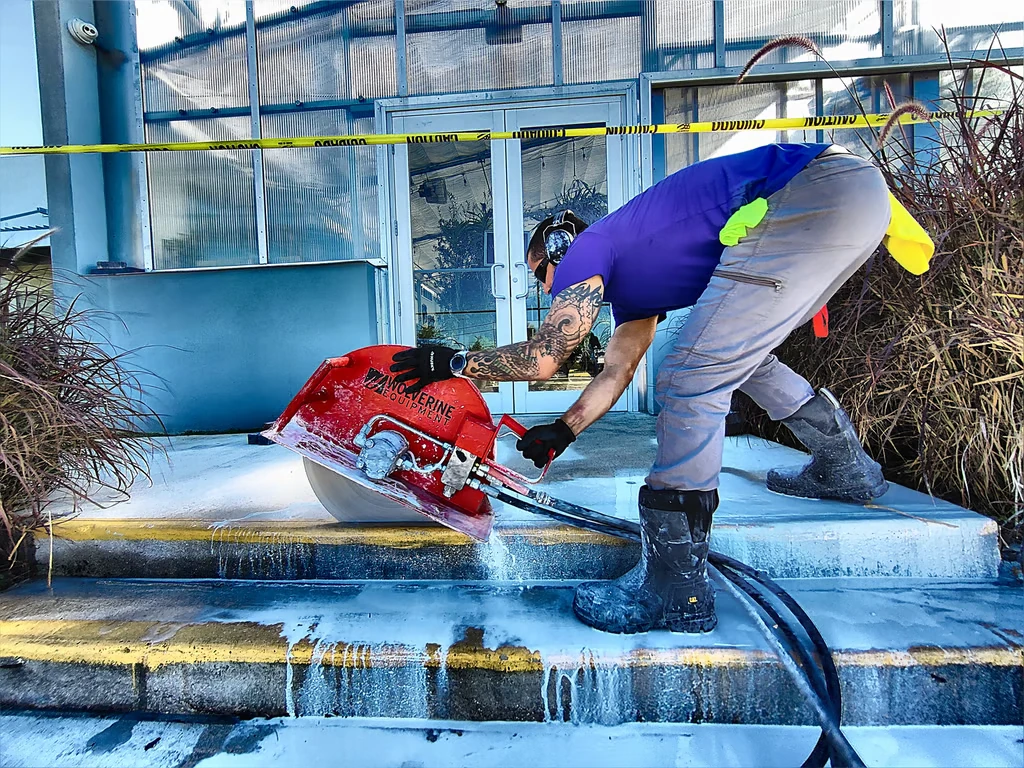
3. Use wet cutting when possible
Water keeps the blade cooler and improves cutting speed.
4. Use multiple passes
Cut concrete first, then finish through the steel.
These techniques dramatically improve blade life.
Grinder vs Saw Cutting
Contractors cut rebar in two main ways.
Walk-behind or handheld concrete saw
Best for cutting reinforced slabs.
Advantages:
✔ straight cuts
✔ deeper cutting depth
✔ designed for reinforced concrete blades
Angle grinder
Common for smaller jobs or exposed rebar.
Advantages:
✔ portable
✔ fast access
✔ good for trimming steel rods
However, grinders can produce more heat and sparks, so proper blade selection is critical.
Safety Reminder When Cutting Rebar
Cutting reinforced concrete produces silica dust and sparks, so safety matters.
Always use:
✔ eye protection
✔ hearing protection
✔ respiratory protection
✔ gloves
Wet cutting also helps reduce silica dust exposure.
Signs Your Blade Is Struggling With Rebar
If your blade isn’t designed for reinforced concrete, you may notice:
• blade slowing dramatically
• segment overheating
• uneven segment wear
• vibration or wobble
When this happens, switching to a reinforced-concrete rated blade can make a huge difference.
Final Jobsite Answer
So, can you cut rebar with a diamond blade?
👉 Yes — if the blade is designed for reinforced concrete and used correctly.
Using the wrong blade can lead to:
- slow cutting
- damaged segments
- expensive blade replacement
But the right blade and proper technique allow contractors to cut reinforced concrete efficiently and safely.
More Contractor Cutting Guides
For more real-world diamond blade knowledge from BladeGuyPro, visit:
You’ll find contractor guides on:
- diamond blade troubleshooting
- blade sharpening techniques
- wet vs dry cutting
- jobsite cutting tips
Built for contractors who want their blades to cut faster and last longer. 🔧🧱