
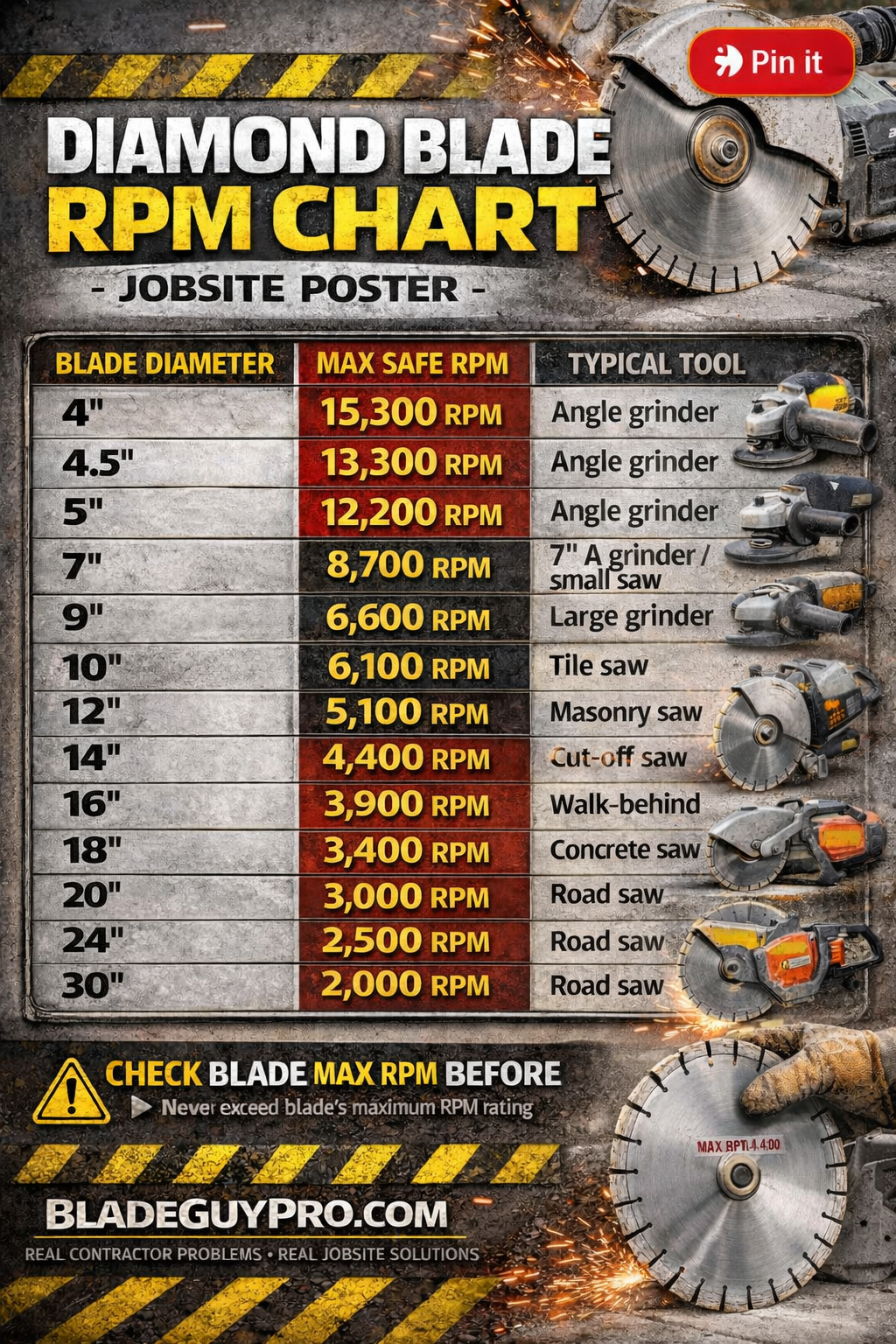
This is one of the most important safety and performance factors when using diamond blades.
From BladeGuyPro

After 40+ years working with diamond tools, I built BladeGuyPro to help contractors solve real jobsite problems.
Visit bladeguypro.com/ for more guides on:
✔ Diamond blade troubleshooting
✔ Cutting techniques
✔ Tool selection charts
✔ Contractor safety tips
Running a blade at the correct RPM ensures:
✔ Maximum cutting speed
✔ Longer blade life
✔ Safer operation
✔ Less blade wobble
✔ Reduced overheating
Running a blade too fast or too slow can damage the blade and create dangerous conditions.
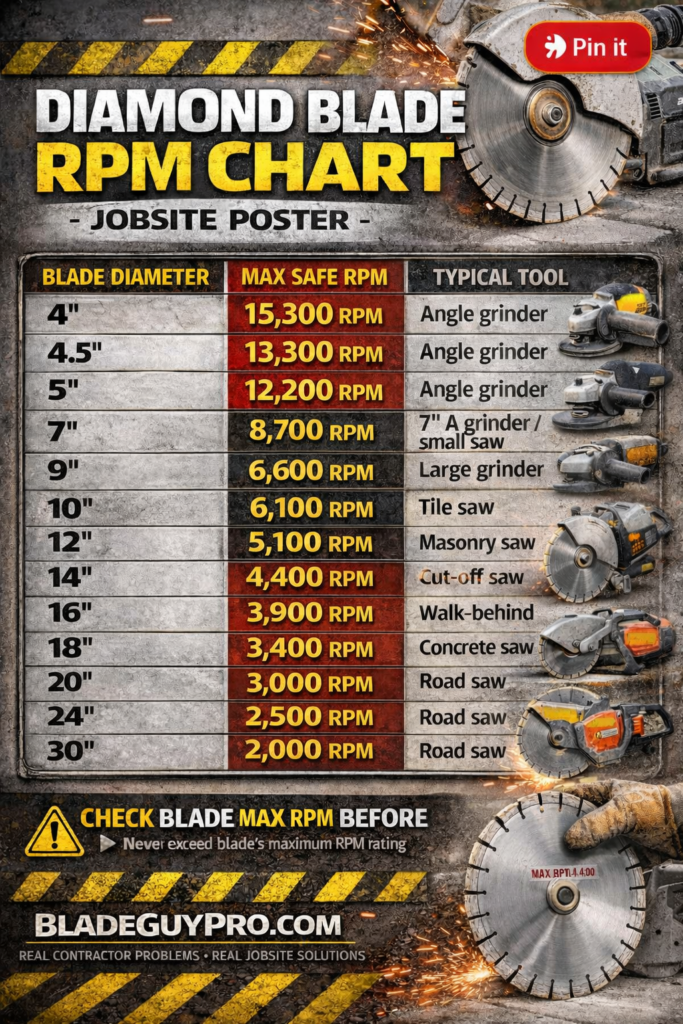
Diamond Blade RPM Chart
Contractor Quick Guide
| Blade Diameter | Max Safe RPM | Typical Tool |
|---|---|---|
| 4″ | 15,300 RPM | Angle grinder |
| 4.5″ | 13,300 RPM | Angle grinder |
| 5″ | 12,200 RPM | Angle grinder |
| 7″ | 8,700 RPM | Angle grinder / small saw |
| 9″ | 6,600 RPM | Large grinder |
| 10″ | 6,100 RPM | Tile saw |
| 12″ | 5,100 RPM | Masonry saw |
| 14″ | 4,400 RPM | Cut-off saw |
| 16″ | 3,900 RPM | Walk-behind saw |
| 18″ | 3,400 RPM | Concrete saw |
| 20″ | 3,000 RPM | Road saw |
| 24″ | 2,500 RPM | Road saw |
| 30″ | 2,000 RPM | Large concrete saw |
How Contractors Get This Wrong
After 40+ years in the diamond tool industry, one of the most common jobsite problems I hear is:
Using a blade designed for a lower RPM on a high-speed tool.
Example:
A 14″ blade rated for 4,400 RPM on a saw spinning 5,000+ RPM
This causes:
• Segment loss
• Core warping
• Excessive vibration
• Premature blade failure
How to Check Blade Speed
Every diamond blade has a maximum RPM printed on the core.
Before cutting:
1️⃣ Check blade max RPM
2️⃣ Check tool RPM rating
3️⃣ Make sure the tool does NOT exceed blade rating
The blade RPM must always be higher than the tool RPM.
Pro Contractor Tip
Larger blades must spin slower.
As blade diameter increases, the rim speed increases, which means RPM must decrease to stay safe.
This is why a 4″ grinder blade spins over 15,000 RPM, while a 30″ concrete blade spins around 2,000 RPM.
BladeGuy Pro Advice
After helping thousands of contractors over 40 years in diamond tooling, the most reliable way to get clean cuts and long blade life is simple:
Match the blade diameter to the correct RPM tool.
Never exceed the blade’s maximum RPM.
Why Your Diamond Blade Stopped Cutting
bladeguypro.com/
Real Contractor Problems • Real Jobsite Solutions
Visit bladeguypro.com/ for contractor guides on:
✔ Diamond blade troubleshooting
✔ Cutting techniques
✔ Blade selection charts
✔ Jobsite safety tips
Email us at info@bladeguypro.com

After 40+ years working with diamond tools, I built BladeGuyPro to help contractors solve real jobsite problems.
Visit bladeguypro.com/ for more guides on:
✔ Diamond blade troubleshooting
✔ Cutting techniques
✔ Tool selection charts
✔ Contractor safety tips