
Well, it depends on the material, the bond hardness, and how the blade is used.
bladeguypro.com/
4
The Question Every Contractor Asks
One of the most common questions on the jobsite is:
“How long should a diamond blade last?”
The honest answer: it depends on the material, the bond hardness, and how the blade is used.
After 40+ years working with diamond tooling, most contractors are surprised to learn that blades usually fail early not because they are cheap—but because the wrong blade is being used or it’s being run incorrectly.
This guide explains the real-world life expectancy of diamond blades and how to get the most cutting out of every blade.
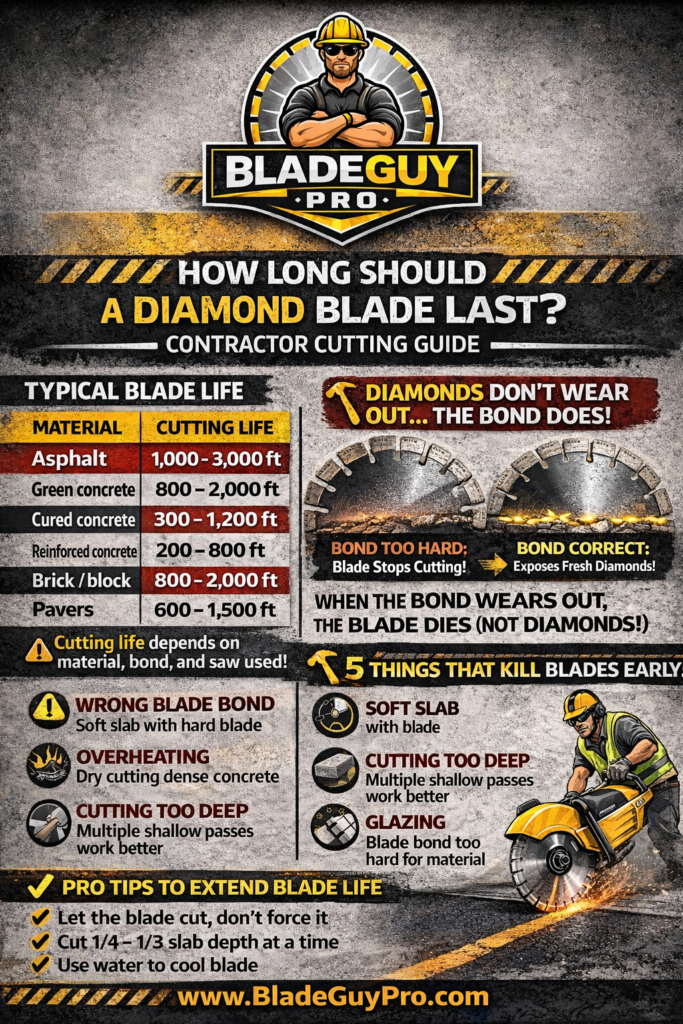
Typical Diamond Blade Life Expectancy
Here’s a rough contractor reality chart for blade life:
| Material Being Cut | Expected Blade Life |
|---|---|
| Asphalt | 1,000 – 3,000 feet |
| Green concrete | 800 – 2,000 feet |
| Cured concrete | 300 – 1,200 feet |
| Reinforced concrete | 200 – 800 feet |
| Brick / block | 800 – 2,000 feet |
| Pavers | 600 – 1,500 feet |
⚠️ These are general field estimates, not laboratory numbers.
Blade life can change dramatically depending on:
- Aggregate hardness
- Rebar content
- Saw horsepower
- Cutting depth
- Operator technique
What Actually Wears Out a Diamond Blade?
Many contractors assume the diamonds wear out first. In reality, blade life is controlled by the bond that holds the diamonds.
Diamond blades work by exposing new diamonds as the bond wears away.
If the bond wears correctly → blade cuts fast and lasts longer.
If the bond wears incorrectly → the blade stops cutting.
The 5 Things That Destroy Diamond Blades Early
1️⃣ Wrong Blade Bond
Using a blade designed for asphalt on hard concrete will destroy it quickly.
General rule:
- Hard material → soft bond blade
- Soft material → hard bond blade
2️⃣ Cutting Too Deep
Forcing a blade deep into concrete creates excessive heat and slows cutting.
Best practice:
Cut about 1/4–1/3 slab depth per pass.
Multiple shallow passes often cut faster and cooler than one deep pass.
3️⃣ Overheating
Heat is the #1 killer of diamond blades.
Common causes:
- Dry cutting dense concrete
- No cooling between passes
- Running dull blades
Signs of overheating:
- blue steel core
- segment glazing
- slow cutting
4️⃣ Glazing
Glazing happens when the bond does not wear away fast enough to expose new diamonds.
The blade becomes smooth and stops cutting.
Quick fix:
Cut something abrasive like:
- cinder block
- asphalt
- dressing stone
This exposes fresh diamonds again.
5️⃣ Wrong Saw RPM
Running blades at incorrect speeds can shorten blade life dramatically.
Problems include:
- segment loss
- overheating
- poor cutting speed
Always match the blade rating to the saw RPM.
Signs Your Diamond Blade Is Worn Out
Here are the most common signs contractors see:
• Segments worn nearly flush with the steel core
• Blade cuts slower even after sharpening
• Excess vibration
• Segment cracks or missing pieces
• Steel core exposed
Once segments are nearly gone, the blade has reached the end of its life.
Pro Contractor Tips to Extend Blade Life
Here are a few field tricks that dramatically extend blade life:
✔ Let the blade cut — don’t force it
✔ Use the correct blade for the material
✔ Make multiple shallow passes
✔ Use water when possible
✔ Sharpen glazed blades quickly
These simple habits can often double the life of a blade.
The Truth About Cheap vs Premium Blades
Many contractors assume cheaper blades save money.
But cheaper blades often:
- use lower diamond concentration
- wear faster
- cut slower
A premium blade may cost more upfront but often delivers 2–4× more cutting footage.
Final Thoughts from BladeGuy Pro
Diamond blades are one of the most misunderstood tools on the jobsite.
When used correctly, a good blade should:
✔ Cut fast
✔ Stay cool
✔ Deliver hundreds or thousands of feet of cutting
When used incorrectly, even the best blade can be destroyed quickly.
The key is matching the blade to the material and cutting technique.
More Contractor Guides
For more real-world diamond blade knowledge from bladeguypro.com/, email us at info@bladeguypro.com
You’ll find guides on:
- Diamond blade troubleshooting
- Wet vs dry cutting
- Sharpening diamond blades
- Contractor cutting techniques
Built for contractors who want their blades to cut faster and last longer. 🔧