BladeGuy Pro
After helping thousands of contractors over 40 years in the diamond tool industry, BladeGuy Pro shares real jobsite knowledge about diamond blades, cutting tools, and contractor techniques.
Diamond blades are built to be tough. They cut concrete, asphalt, brick, block, and even steel reinforcement. But even the best blade can wear out quickly if it’s used the wrong way.
Many contractors assume blades simply “wear out,” but in reality most premature blade failures are caused by jobsite mistakes. Avoiding these common problems can dramatically increase blade life, improve cutting speed, and save money.
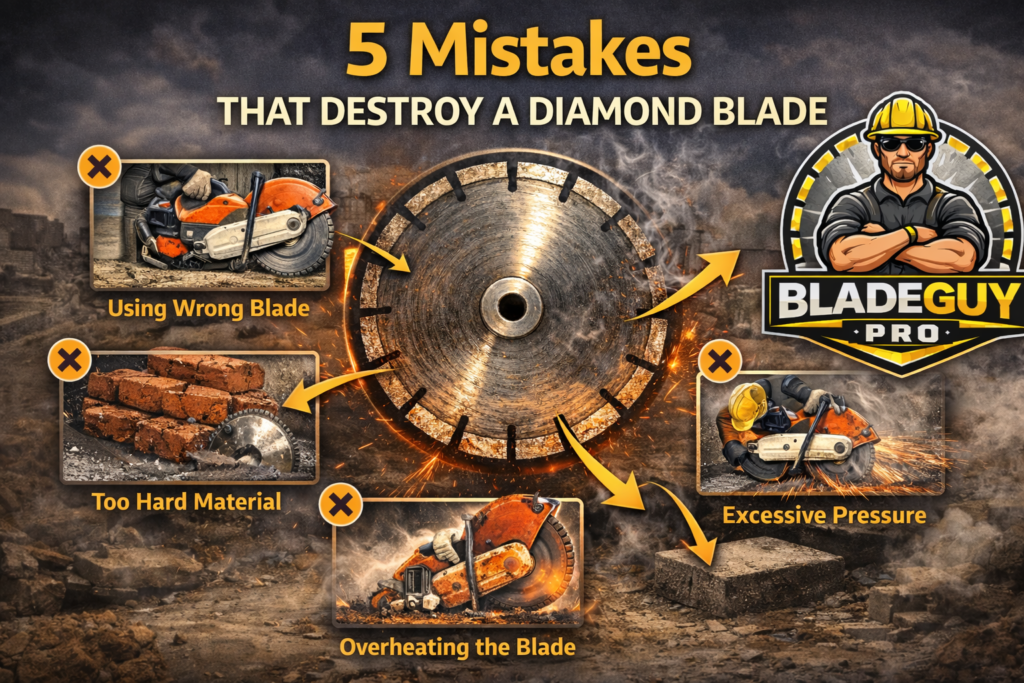
Here are five of the most common mistakes that destroy diamond blades on the jobsite.
1. Using the Wrong Blade for the Material
This is the number one blade killer.
Different materials require different diamond bond hardness. The bond is what holds the diamonds in place while cutting.
- Concrete requires a softer bond so new diamonds expose as the blade cuts.
- Asphalt requires a harder bond to hold the diamonds longer in abrasive material.
- General purpose blades try to balance both but rarely perform as well as a material-specific blade.
Using a concrete blade in asphalt can burn the diamonds away quickly. Using an asphalt blade in cured concrete may cause the blade to glaze over and stop cutting.
Tip: Always match the blade to the material you’re cutting.
2. Not Letting the Blade Do the Work
Diamond blades are designed to grind through material, not force their way through it.
One of the fastest ways to destroy a blade is pushing too hard into the cut. This causes:
- Segment overheating
- Core warping
- Diamond loss
- Premature segment wear
If the blade is cutting properly, it should feed smoothly with moderate pressure.
Remember:
Let the diamonds cut — forcing the blade only shortens its life.
3. Running the Blade Dry When It Needs Water
Many blades are designed for wet cutting, which keeps the blade cool and removes slurry from the cut.
Without water:
- Heat builds rapidly
- Segments can crack or break
- The blade may warp or wobble
While many blades are rated for dry cutting, even those blades benefit from periodic cooling passes.
Good practice:
Make several shallow passes and allow the blade to spin free occasionally to cool down.
4. Using a Worn or Underpowered Saw
Sometimes the blade gets blamed when the real problem is the saw.
Issues that destroy blades include:
- Worn arbor bearings
- Bent saw shafts
- Poor alignment
- Underpowered equipment
These problems cause blade wobble and uneven wear, which can break segments or damage the blade core.
A diamond blade needs a stable, straight spinning saw to perform properly.
5. Choosing a Cheap Blade for Heavy Work
Not all diamond blades are created equal.
Lower-cost blades often contain:
- Less diamond concentration
- Lower-grade diamonds
- Weaker bonding materials
- Thinner cores
While they may work for small jobs, they often wear out extremely fast on demanding projects.
A high-quality blade may cost more up front but will usually:
- Cut faster
- Last significantly longer
- Reduce downtime
For professionals cutting daily, premium blades usually cost less per cut.
Final Thoughts
Diamond blades are a major investment on the jobsite. By avoiding these five common mistakes, contractors can dramatically improve blade life and cutting performance.
Quick recap:
- Use the correct blade for the material
- Don’t force the cut
- Use water when required
- Maintain your saw equipment
- Choose quality blades for professional work
When used correctly, a good diamond blade can deliver thousands of feet of cutting and consistent performance job after job.
If you want to get the maximum life and performance from your blades, follow BladeGuy Pro for more tips, tool reviews, and jobsite insights from the field.
Stay sharp. Cut smarter.
— BladeGuy Pro