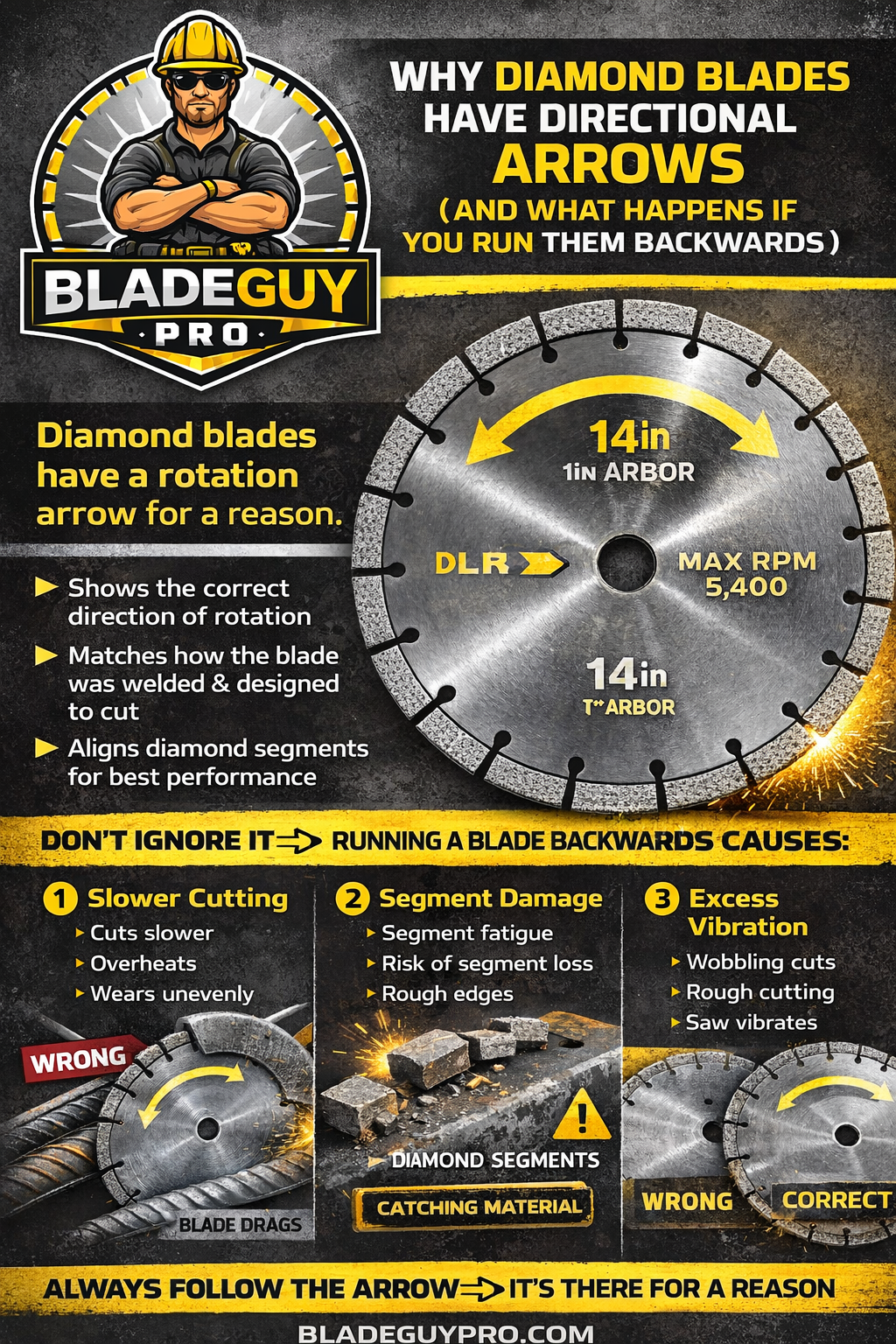
(And What Happens If You Run Them Backwards)
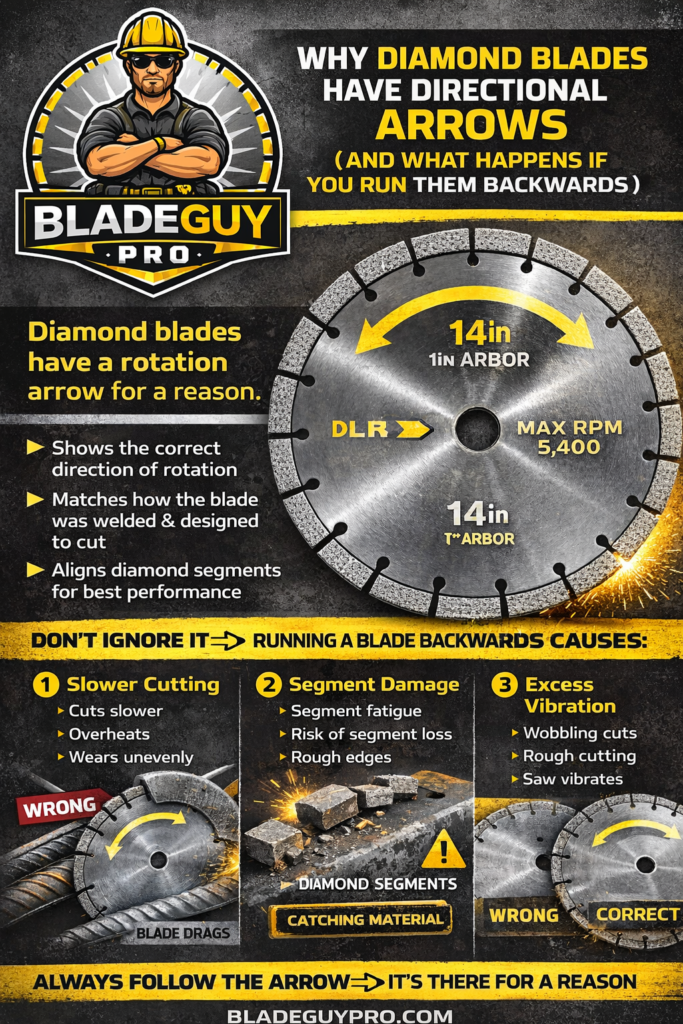
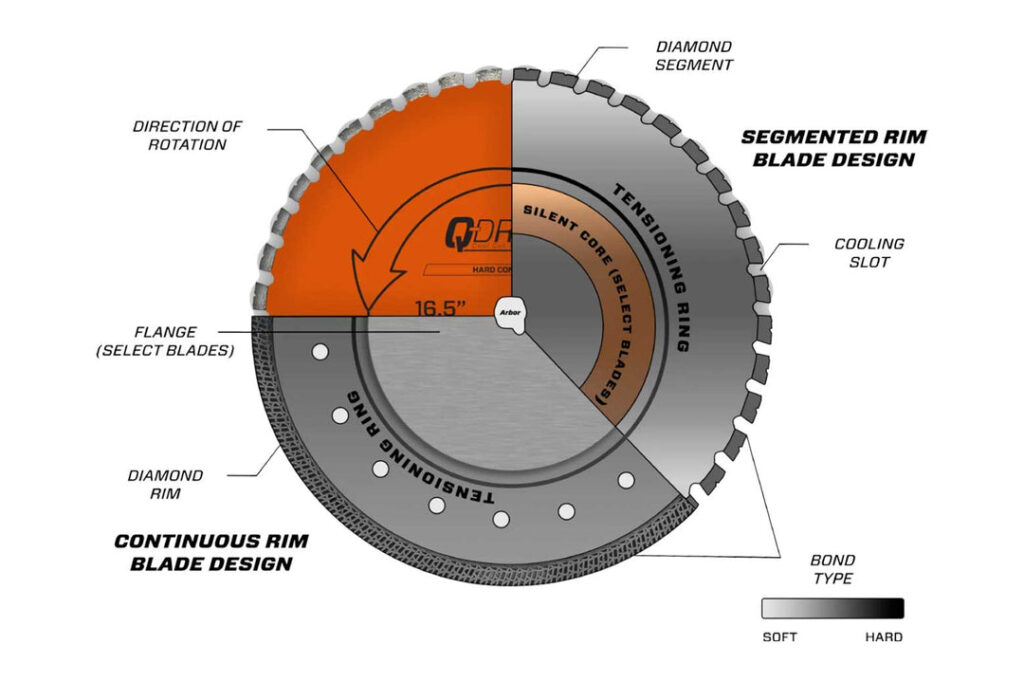
If you’ve ever looked closely at a diamond blade, you’ll notice a small directional arrow stamped on the steel core.
Many contractors ignore it.
Some assume it doesn’t matter.
But installing a blade backwards can cause:
• Slower cutting
• Excess heat
• Vibration
• Shorter blade life
After helping thousands of contractors over 40 years in the diamond tool industry, this simple mistake shows up on jobsites constantly.
What the Direction Arrow Actually Means
The arrow stamped on the blade shows the intended direction of rotation.
It matches the direction the blade was engineered to cut.
This ensures:
• Proper diamond exposure
• Segment support during cutting
• Reduced vibration
Example: Direction Arrow on Diamond Blade
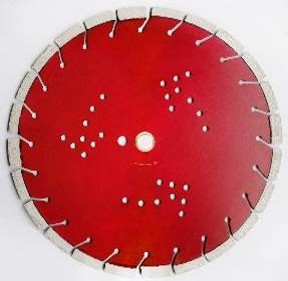
Many blades include:
• Rotation arrow
• Maximum RPM
• Size and arbor info
Always verify before installing.
What Happens If You Run the Blade Backwards
1. Slower Cutting
Diamond segments are designed to attack the material in one direction.
Running the blade backwards can cause:
• Poor diamond exposure
• Increased friction
• Reduced cutting speed
2. Segment Stress
Segments are laser welded or sintered onto the blade core.
Running the blade backwards can create:
• Extra segment stress
• Higher chance of segment damage
• Reduced blade life
Diamond Blade Segment Construction
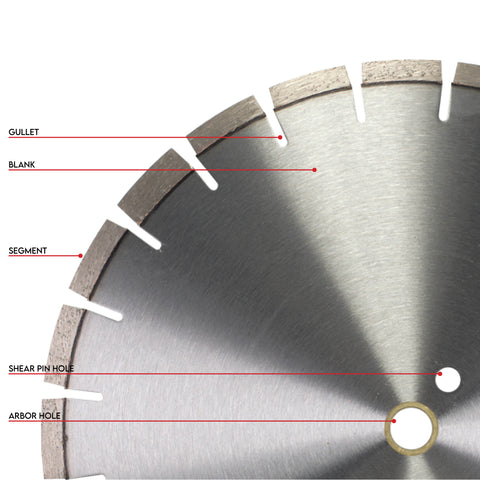
Segments contain:
• Industrial diamonds
• Metal bond matrix
• Welded connection to steel core
3. Increased Vibration
A backwards blade often causes:
• Saw vibration
• Wobbling cuts
• Rough edges
Many contractors assume the blade is defective when it’s simply installed the wrong direction.
Correct Blade Rotation vs Incorrect
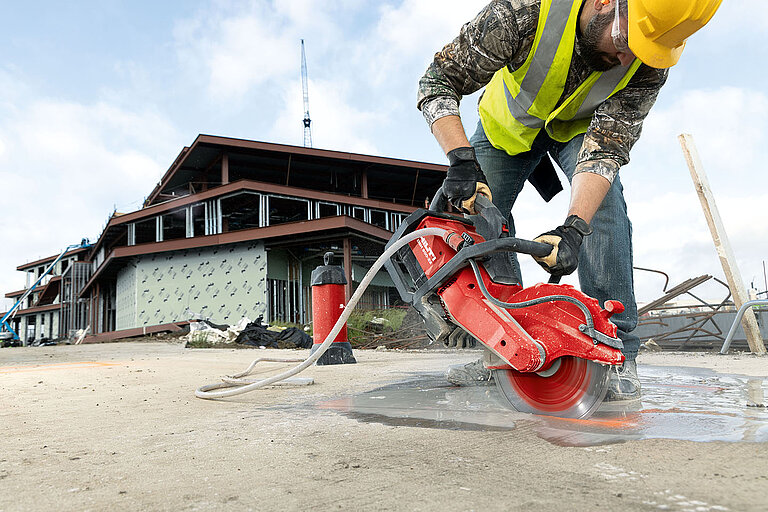

Proper rotation ensures:
• Stable cutting
• Even wear
• Longer blade life
The One Time Direction Doesn’t Matter
Some blades are bi-directional.
These include:
• Continuous rim tile blades
• Some vacuum brazed blades
But if a blade has an arrow stamped on it:
Always follow it.
Pro Contractor Tip
Before mounting any diamond blade:
- Check the rotation arrow
- Check the saw rotation direction
- Make sure they match
This takes five seconds and can save a blade.
Final Thought
Small details make big differences on the jobsite.
Mounting a blade in the correct direction helps contractors:
• Cut faster
• Reduce vibration
• Extend blade life
After four decades working with contractors, one thing is clear:
The blades that last the longest are almost always the ones mounted correctly.