
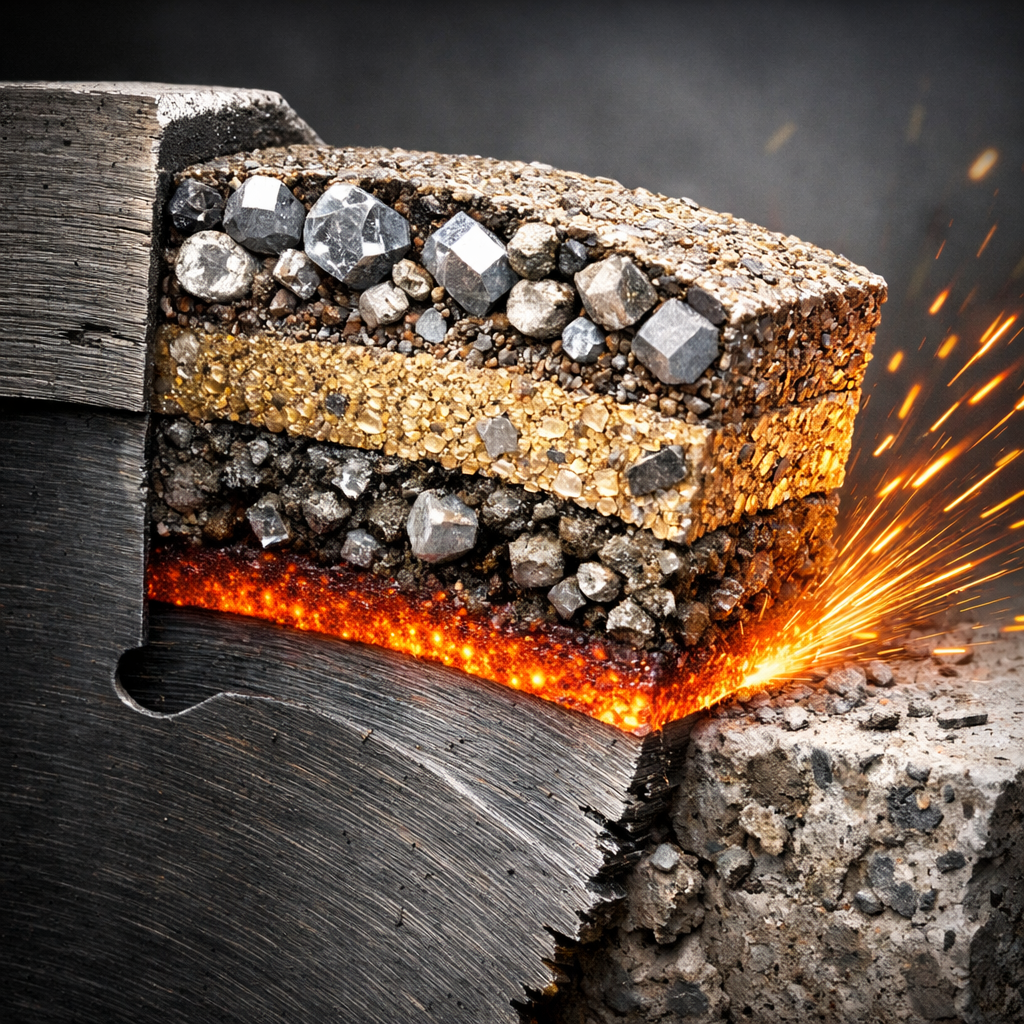
“This blade is better because it has MORE diamonds in it…”
You’ve been sold — not educated.
If you’ve ever been told:
“This blade is better because it has MORE diamonds in it…”
You’ve been sold — not educated.
After 40+ years helping contractors on real jobsites, we’ve heard this line thousands of times — and it’s one of the most misleading sales pitches in the diamond blade industry.

Let’s break down the truth 👇
💡 THE MYTH
❌ “More diamonds = faster cutting, longer life, better blade”
Sounds logical… but it’s flat-out wrong in many real-world situations.
🔍 THE REALITY (What Salesmen Don’t Tell You)
1. Diamond Exposure Matters More Than Diamond Count
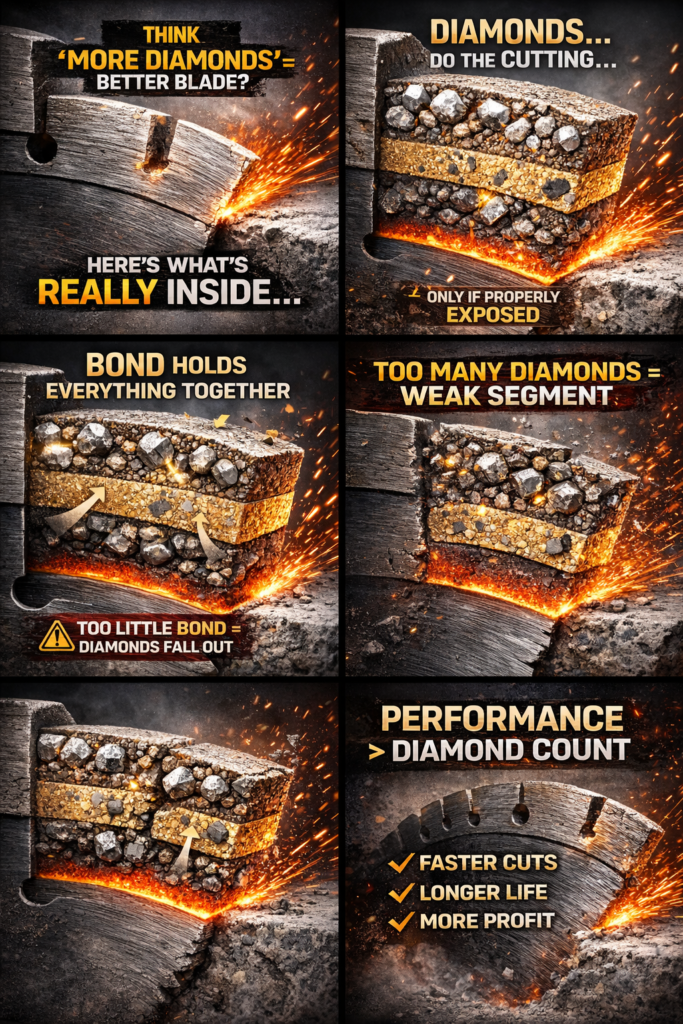
If diamonds aren’t exposed properly, they don’t cut — period.
👉 A blade packed with diamonds can actually:
- Cut slower
- Overheat
- Glaze over
2. Bond Hardness Controls Performance
The metal bond determines how diamonds are released.
- Hard bond → holds diamonds too long → glazing
- Soft bond → releases diamonds faster → stays sharp
💥 The wrong bond makes even a “high diamond” blade useless.
3. Too Many Diamonds Can Kill Performance
Overloading a segment with diamonds can:
- Reduce cutting speed
- Increase friction
- Cause overheating
- Lead to premature failure
👉 More is NOT always better — balance is everything.
4. Material Being Cut Changes Everything
Diamond concentration must match the material:
| Material | Ideal Setup |
|---|---|
| Asphalt | Lower concentration + softer bond |
| Hard concrete | Balanced concentration + medium bond |
| Reinforced concrete | Engineered segment + proper exposure |
5. Segment Design > Diamond Count
The best blades are engineered with:
- Proper segment height
- Cooling channels
- Diamond spacing
- Heat dissipation design
👉 These factors outperform raw “diamond concentration” every time.
6. Too High Diamond Concentration Can WEAKEN the Segment
Here’s something most salesmen will never tell you:
Packing too many diamonds into a segment causes issues. It actually reduces the amount of metal bond holding them in place.
And that creates BIG problems:
- ❌ Diamonds pull out too early
- ❌ Blade wears out faster
- ❌ Segment loses structure
- ❌ Performance becomes inconsistent
💡 Why This Happens:
A diamond blade isn’t just diamonds — it’s a balance between diamonds and metal bond.
👉 The metal bond is what holds the diamonds in place
👉 Remove too much bond → diamonds have nothing to anchor to
⚖️ The Truth:
- Too few diamonds → slow cutting
- Too many diamonds → weak segment + premature wear
👉 The sweet spot is engineered balance — not highest concentration.
💥 BLADEGUY PRO TRUTH (Updated)
“A great blade isn’t loaded with diamonds…
it’s built with the right balance of diamond AND bond.”
🚨 REAL JOBSITE TRUTH
Two blades:
- Blade A: “High diamond concentration”
- Blade B: Properly engineered bond + exposure
👉 Blade B will:
- Cut faster
- Last longer
- Reduce downtime
- Make you more money
📊 COST REALITY (What Contractors Actually Care About)
Cheap sales pitch:
“More diamonds = better blade”
Smart contractor thinking:
- Cost per cut
- Speed per job
- Downtime cost
- Labor efficiency
💰 The wrong blade costs WAY more than the right blade.
🚀 CALL TO ACTION
Stop buying blades based on sales talk.
Start buying based on real performance.
👉 Visit bladeguypro.com/
👉 Get blades tested by real contractors
👉 Cut faster. Last longer. Make more money.