BladeGuyPro Contractor Guide
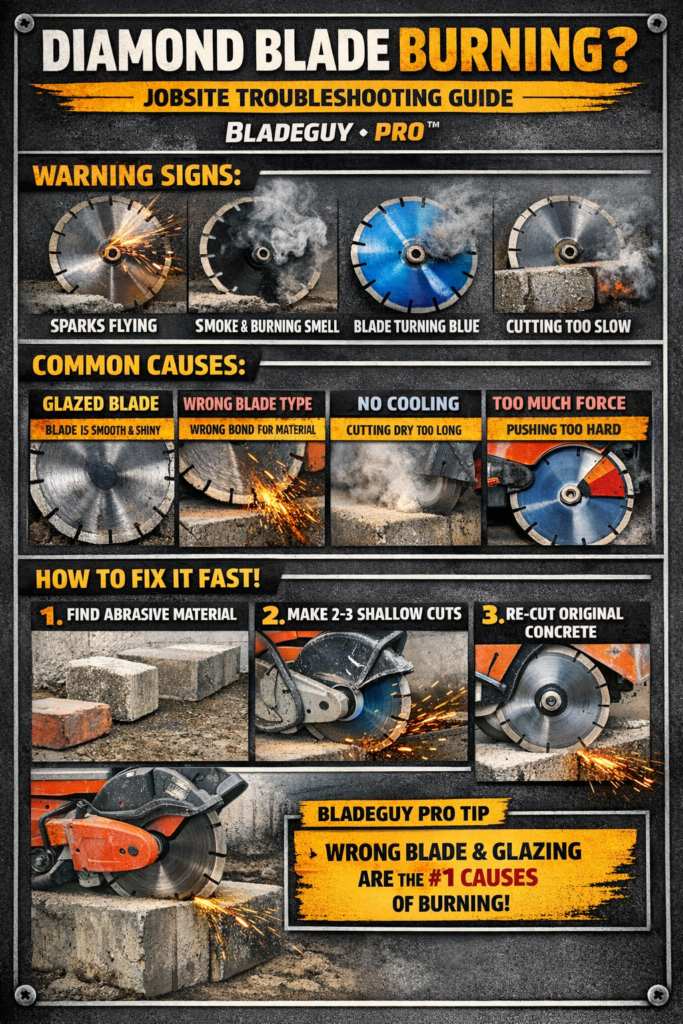

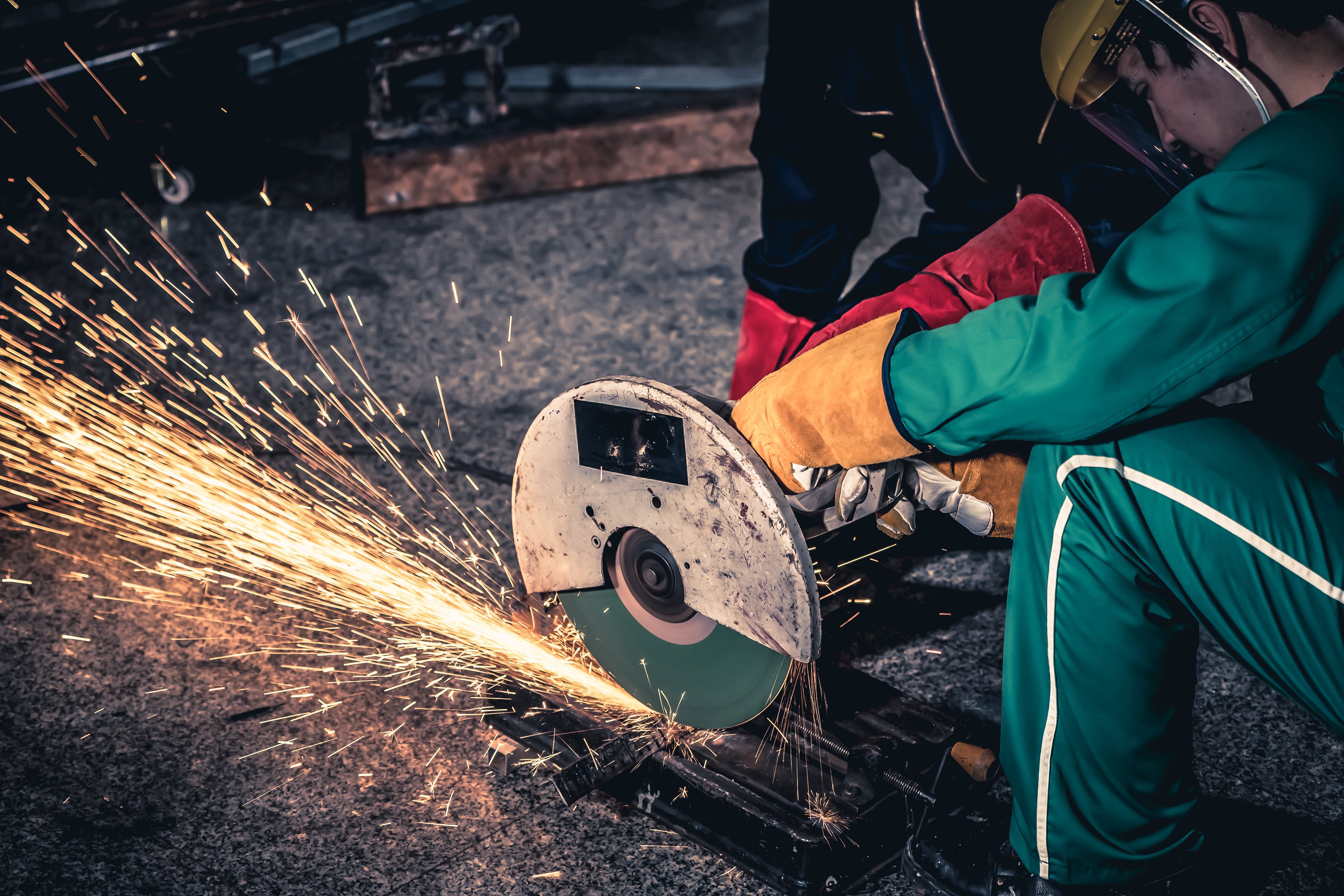
If your diamond blade starts smoking, sparking, or burning the concrete, something is wrong.
A properly matched diamond blade should cut smoothly and throw dust or slurry, not sparks and smoke.
After 40+ years working with diamond tools, this is one of the most common problems contractors ask about.
The good news:
Most burning blades can be fixed in under 60 seconds on the jobsite.
Warning Signs Your Diamond Blade Is Overheating

4
Watch for these signs:
⚠ Sparks coming from the blade
⚠ Burning smell
⚠ Blade turns blue or dark
⚠ Cutting slows dramatically
⚠ Segments look smooth and shiny
If you see these signs, your blade is overheating and glazing.
This means the diamonds are no longer exposed to cut.
The 5 Most Common Reasons Diamond Blades Burn
1. The Blade Is Glazed Over
This is the #1 cause of burning blades.
It happens when:
• Cutting very hard concrete
• Cutting too slowly
• Using the wrong bond blade
When the bond is too hard, the diamonds cannot break free and expose new cutting edges.
The blade simply slides on the concrete and builds heat.
Quick Jobsite Fix
Cut into an abrasive material for 30 seconds:
- Concrete block
- Asphalt
- Sandstone
- Brick
This re-exposes new diamonds and restores cutting speed.
This process is called “dressing the blade.”
2. Wrong Blade for the Material
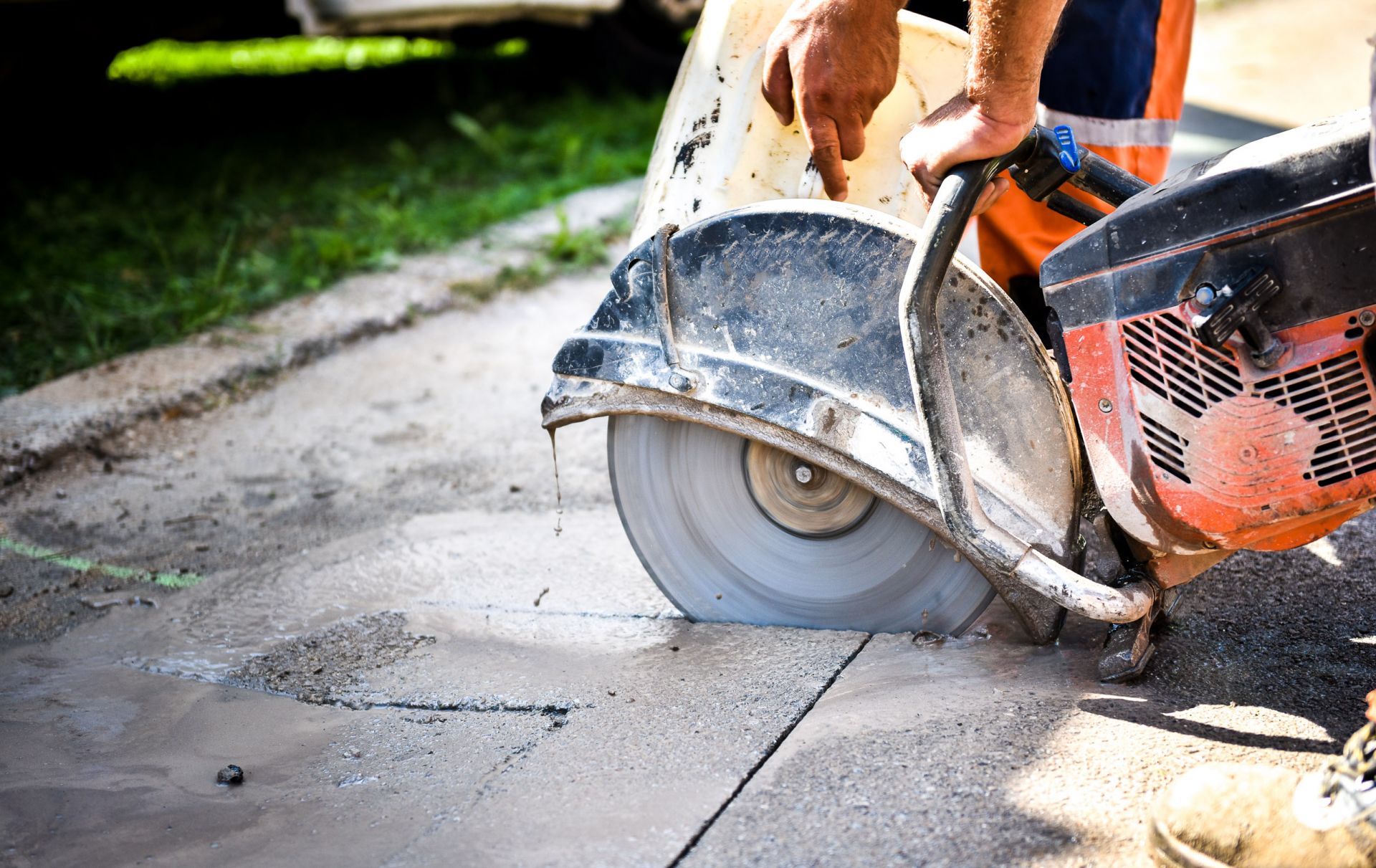

Different materials require different blade bonds.
Examples:
| Material | Correct Blade |
|---|---|
| Asphalt | Soft bond asphalt blade |
| Hard concrete | Soft bond concrete blade |
| Green concrete | Medium bond |
| Brick / block | Hard bond masonry blade |
If you use a hard bond blade on hard concrete, the blade will glaze and burn.
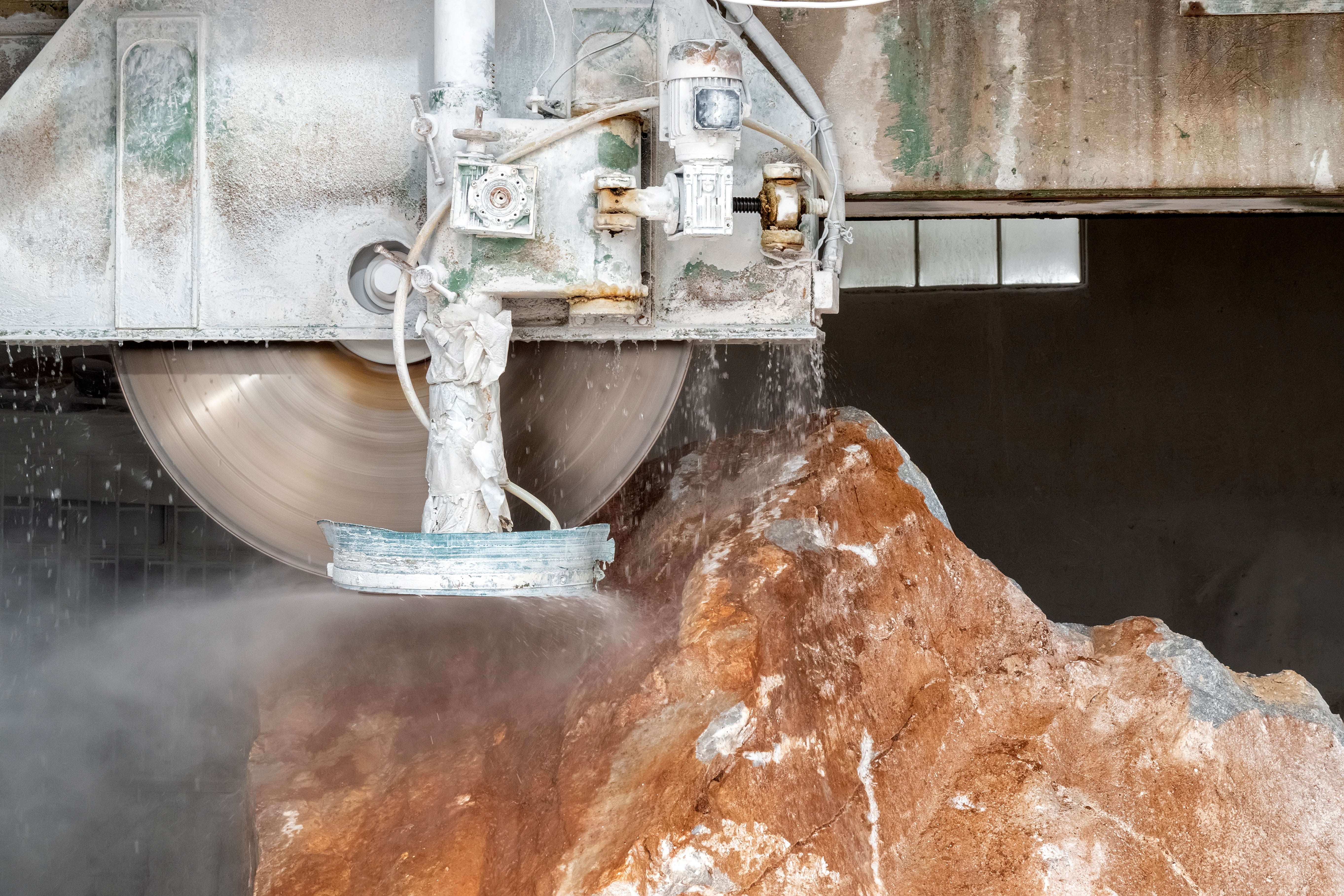
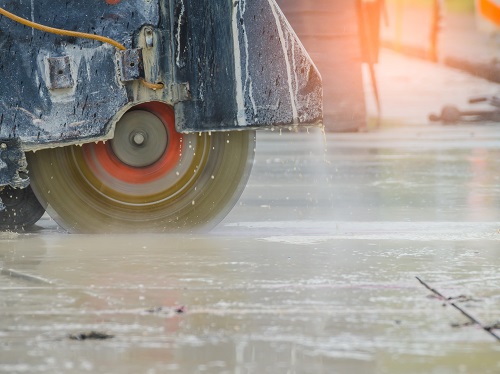
3. Cutting Without Enough Cooling


4
Heat is the enemy of diamond blades.
Wet cutting:
✔ reduces friction
✔ extends blade life
✔ prevents glazing
Dry cutting is fine, but you must:
• Lift blade every 20–30 seconds
• Let air cool the segments
• Avoid forcing the cut
4. Forcing the Blade
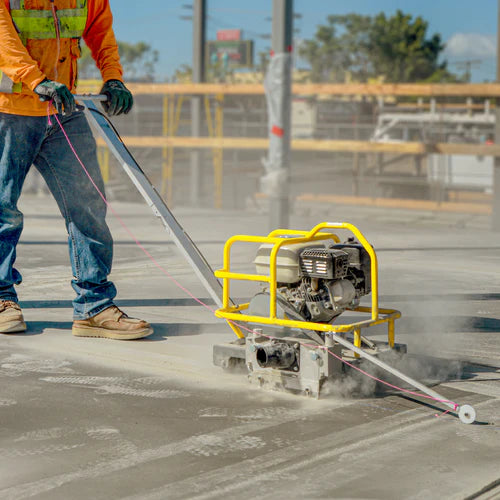
A diamond blade is not a grinding wheel.
The diamonds do the cutting.
If you push too hard:
• Friction skyrockets
• Blade overheats
• Segments glaze
• Core can warp
Contractor Rule
Let the blade pull itself through the cut.
If you must force it, the blade is wrong for the material.
5. RPM Is Too High

4
Every diamond blade has a maximum safe RPM rating.
Examples:
| Blade Size | Typical Max RPM |
|---|---|
| 4.5″ | 13,000 RPM |
| 7″ | 8,500 RPM |
| 14″ | 5,500 RPM |
Running too fast creates excess heat and glazing.
Always check the blade label.
The 60-Second Trick to Fix a Burning Diamond Blade
Most contractors throw away blades that are still good.
Instead do this:
Step 1
Find an abrasive material.
Examples:
• Concrete block
• Asphalt
• Old brick
Step 2
Make 2–3 shallow cuts.
Step 3
Return to the original concrete cut.
You will usually see the blade cutting aggressively again.
Contractor Tip From BladeGuyPro
Most diamond blade problems come down to three mistakes:
1️⃣ Wrong blade for the material
2️⃣ Blade glazing
3️⃣ Pushing the saw too hard
Fix those and your blade life can double or triple.
BladeGuyPro Quick Troubleshooting Chart
| Problem | Likely Cause | Fix |
|---|---|---|
| Blade smoking | Glazing | Dress blade |
| Blade sparks | Overheating | Reduce pressure |
| Blade cutting slow | Bond too hard | Use softer blade |
| Blade wobbling | Bent core | Replace blade |
| Segments wearing fast | Bond too soft | Use harder blade |
Final Word from BladeGuyPro
A quality diamond blade should:
✔ Cut fast
✔ Run cool
✔ Expose diamonds continuously
If your blade is burning the concrete, it is almost always a bond mismatch or glazing problem.
Fix that, and your saw will cut like new again.
Scott – BladeGuyPro
40+ years in diamond tools helping contractors cut faster, safer, and smarter. Thousands of customers input compiled and solutions presented
Visit
www.bladeguypro.com
for more contractor cutting guides,