“My blade got so hot it started smoking.”
After helping thousands of contractors over 40 years in the diamond tool industry, I’ve heard the same complaint again and again:
If your diamond blade is overheating, it’s not just slowing down your cut — it can destroy the blade, warp the core, and become a serious safety issue.
Here’s what causes it and how experienced contractors prevent it.
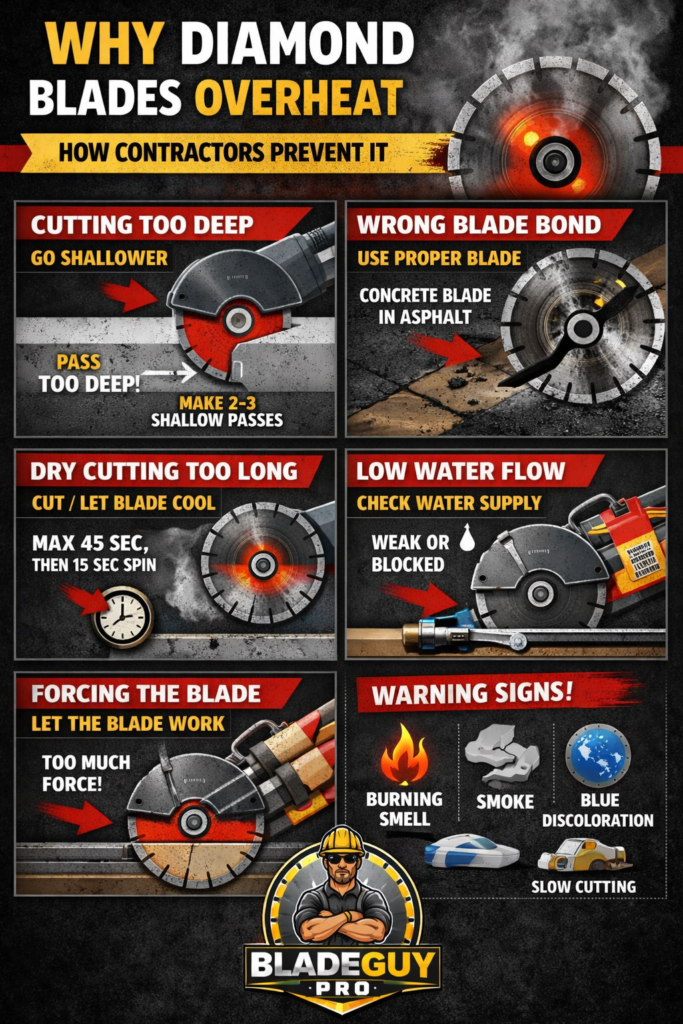
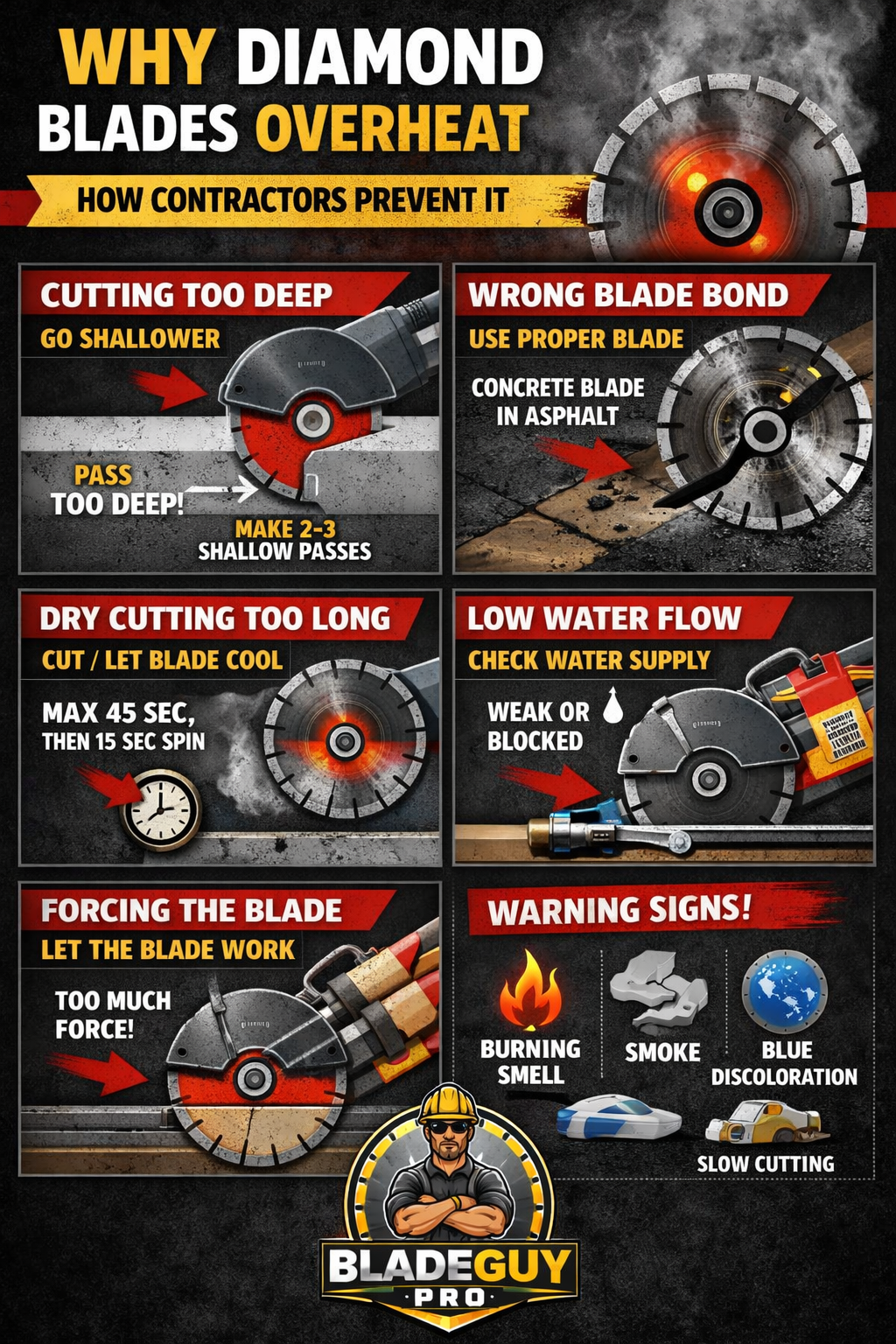
5 Reasons Diamond Blades Overheat
1. Cutting Too Deep in One Pass
One of the biggest jobsite mistakes is trying to cut full depth in one pass.
When a blade cuts too deep:
- Friction increases dramatically
- Heat builds up faster than it can dissipate
- Segments start glazing
- The core can warp
Contractor Tip
Make multiple shallow passes instead.
Example:
6″ concrete slab
Bad method
• One full-depth pass
Correct method
• 2″ pass
• 4″ pass
• Final depth pass
Your blade will stay cooler and cut faster.
2. Using the Wrong Blade Bond
Diamond blades are made with different metal bonds.
If the bond is too hard for the material, diamonds will not expose properly and friction skyrockets.
Example:
Using a concrete blade in asphalt
Asphalt requires:
- Softer bond
- Larger diamonds
- Wider gullets for slurry
This is why asphalt blades cut faster and cooler in asphalt.
3. Dry Cutting Too Long
Dry cutting is convenient but creates massive heat.
Most manufacturers recommend:
30–45 seconds cutting
followed by
10–15 seconds free spin
This allows the blade to:
- Pull cooling air through the segments
- Remove debris
- Lower segment temperature
Contractors who ignore this rule often overheat blades quickly.
4. Insufficient Water (Wet Cutting)
Wet cutting blades depend on water for:
- Cooling
- Slurry removal
- Friction reduction
If water flow is weak or partially blocked, the blade may:
- Overheat
- Warp
- Lose segments
Always check:
- Water pump
- Hose blockage
- Spray alignment
5. Forcing the Blade
A diamond blade is a grinding tool, not a chopping tool.
If you push too hard:
- Friction spikes
- Segments polish over
- Heat builds rapidly
The blade should pull itself into the cut.
If you must force it, something is wrong.
Warning Signs Your Blade Is Overheating
Watch for these jobsite clues:
⚠ Burning smell
⚠ Smoke from the cut
⚠ Blue discoloration on the steel core
⚠ Segments glazing smooth
⚠ Slower cutting speed
If you see these signs, stop immediately and let the blade cool.
Quick Contractor Trick to Cool a Blade
If a blade overheats on the jobsite:
Cut into an abrasive material like:
- Cinder block
- Asphalt
- Sandstone
This exposes new diamonds and restores cutting ability.
Many contractors call this “dressing the blade.”
The Bottom Line
Most diamond blade overheating problems are caused by:
- Cutting too deep
- Wrong blade bond
- Dry cutting too long
- Poor water flow
- Forcing the blade
Fix these issues and your blade will:
✔ Cut faster
✔ Last longer
✔ Run cooler
✔ Be safer
Contractor Tip from BladeGuyPro
After helping thousands of contractors over 40 years in the diamond tool industry, the fastest crews always follow one rule:
Let the blade do the work.
If you want more real jobsite tips, visit:
bladeguypro.com/
Where contractors learn the real reasons diamond tools fail — and how to fix them fast.

After 40+ years working with diamond tools, I built BladeGuyPro to help contractors solve real jobsite problems.
Visit bladeguypro.com/ for more guides on:
✔ Diamond blade troubleshooting
✔ Cutting techniques
✔ Tool selection charts
✔ Contractor safety tips