Diamond blades are one of the most powerful and efficient cutting tools used in construction today. Whether you are cutting asphalt, concrete, block, pavers, or ductile iron, diamond blades make the job faster and cleaner. But like any high-speed cutting tool, using them incorrectly can lead to serious injury, damaged equipment, or destroyed blades.
Understanding a few key safety practices will help you get better performance from your blade while protecting yourself and your crew.
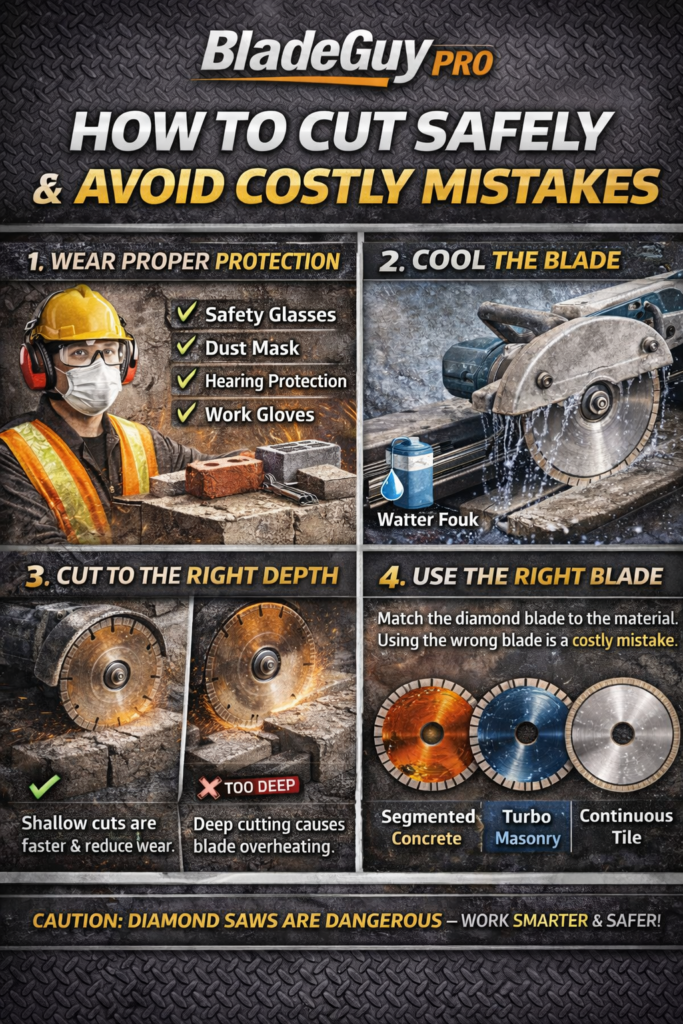
Use the Right Blade for the Material
One of the most common mistakes contractors make is using a general-purpose blade for everything. While that might seem convenient, it can actually be dangerous.
Different materials require different blade bonds and diamond sizes. For example, asphalt blades are designed with a harder bond and larger diamonds because asphalt is abrasive and does not show scoring like concrete.
Using the wrong blade can cause:
- Excessive heat buildup
- Segment loss
- Blade warping
- Premature wear
- Unsafe cutting conditions
Always match the blade to the material you’re cutting.
Inspect the Blade Before Every Use
Before mounting a diamond blade, take a moment to inspect it carefully.
Look for:
- Cracked cores
- Missing segments
- Warped steel
- Excessive wear
- Damage from previous use
If anything looks questionable, do not use the blade. A damaged blade spinning at thousands of RPMs can become extremely dangerous.
Verify the Blade Speed Rating
Every diamond blade is rated for a maximum RPM. The saw you are using must never exceed that rating.
Running a blade faster than its rated speed can cause:
- Core failure
- Segment loss
- Blade vibration
- Catastrophic breakage
Always check the RPM rating printed on the blade and confirm it matches your saw.
Mount the Blade Correctly
Diamond blades have a directional arrow printed on the core. This arrow shows the correct direction of rotation.
Installing the blade backwards can reduce cutting efficiency and increase the risk of segment damage.
Also make sure:
- The arbor hole fits properly
- Flanges are clean and undamaged
- The blade sits flat against the saw
Improper mounting can cause wobbling and unsafe cutting.
Never Force the Cut
Let the diamonds do the work.
Pushing too hard into the material creates heat and stress on the blade. This can lead to:
- Segment loss
- Blade glazing
- Reduced cutting speed
- Increased kickback risk
A properly matched blade should cut smoothly without excessive pressure.
Use Proper Personal Protective Equipment (PPE)
Even the best blade cannot protect you without proper safety gear.
Always wear:
- Safety glasses or face shield
- Hearing protection
- Gloves
- Steel-toe boots
- Respiratory protection when dry cutting
Construction cutting creates dust, debris, and sparks. Proper PPE protects you from long-term health risks and injuries.
Choose Quality Blades
Cheap blades may save money upfront, but they often wear out quickly, cut slower, and can become unsafe.
Premium blades are designed with:
- Stronger steel cores
- Better diamond concentration
- Higher-quality bonding systems
This results in safer, faster, and longer-lasting performance.
Final Thoughts
Diamond blades are incredibly effective tools when used properly. Taking a few extra minutes to choose the right blade, inspect it, and follow safe operating procedures can prevent accidents and costly downtime.
Safety on the job site always starts with the right equipment and the right habits.
Happy Cutting- BladeGuy Pro
Subscribe to get PDF handouts for your Crew