
Contractor Guide from BladeGuy Pro
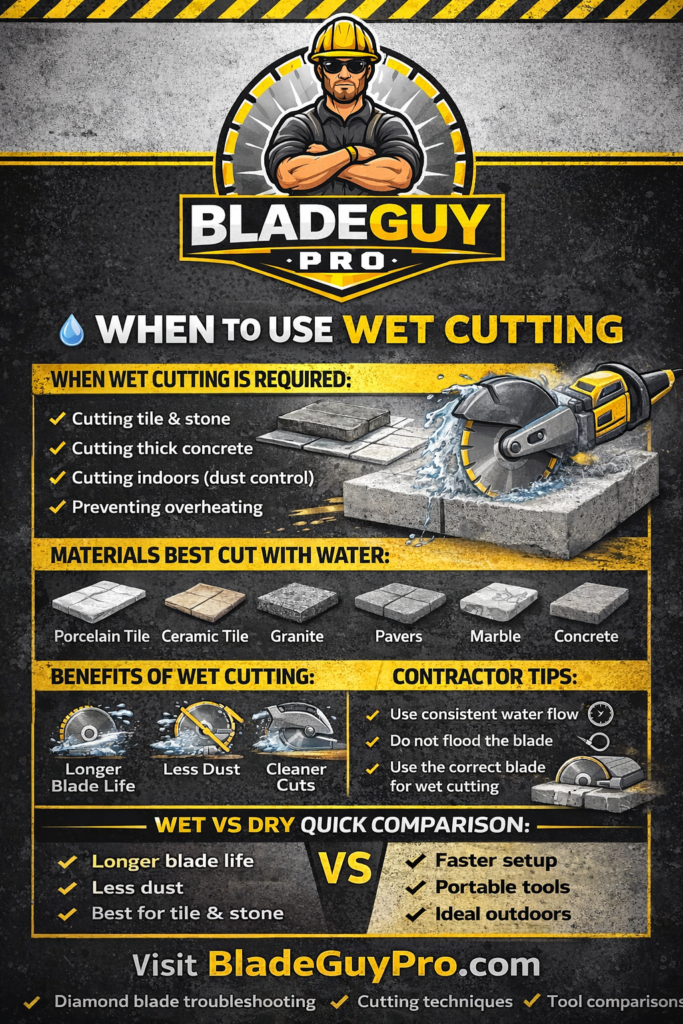
One of the most common questions contractors ask is whether they should cut wet or dry with a diamond blade. Both methods have their place on the jobsite, but wet cutting can dramatically improve blade life, reduce dust, and produce cleaner cuts in many materials.
After more than 40 years working with diamond tooling, I’ve seen how using water during cutting can make a huge difference in performance and safety.
This guide explains when wet cutting is the best choice and why it matters.
What Is Wet Cutting?
Wet cutting simply means using water to cool the blade and the material while cutting.
The water serves three important purposes:
• Cools the diamond segments
• Reduces dust and airborne silica
• Flushes debris from the cut
When the blade runs cooler and cleaner, it cuts faster and lasts longer.
When Contractors Should Use Wet Cutting
Wet cutting works best when cutting materials that create high heat or require clean finishes.
Cutting Porcelain Tile
Porcelain is extremely hard and dense. Without water, blades heat up quickly and may begin to glaze.
Wet cutting helps:
• Keep the blade cool
• Prevent chipping
• Produce smoother edges
That’s why most porcelain tile is cut on a wet tile saw.
Cutting Ceramic Tile
Ceramic tile can chip easily when cut dry.
Using water:
• Reduces vibration
• Produces cleaner cuts
• Improves blade life
Wet cutting is especially helpful when cutting large format tiles or delicate finishes.
Cutting Natural Stone
Materials like granite, marble, and stone can generate a lot of heat when cutting.
Water helps:
• Prevent overheating
• Extend blade life
• Produce smoother edges
Stone fabricators almost always cut using wet saws or water-fed tools.
Cutting Concrete with Large Saws
When using walk-behind saws or large masonry saws, wet cutting helps control heat and dust.
Benefits include:
• Longer blade life
• Reduced airborne silica dust
• Faster cutting speeds
Many professional concrete saws include integrated water systems for this reason.
Cutting Indoors
Dust control is a major reason contractors choose wet cutting.
Using water can dramatically reduce airborne dust when cutting:
• Concrete
• Tile
• Masonry materials
This helps keep job sites cleaner and safer.
Benefits of Wet Cutting
Contractors often notice immediate improvements when using water.
Longer Blade Life
Cooling the blade reduces heat buildup and slows segment wear.
Less Dust
Water suppresses silica dust, which can be dangerous to breathe.
Faster Cutting
Removing debris from the cut helps the blade cut more efficiently.
Cleaner Cuts
Wet cutting produces smoother edges, especially on tile and stone.
When Dry Cutting Is Still Better
Wet cutting is not always practical.
Dry cutting works better when:
• Mobility is required
• Water supply is not available
• Cutting outdoors with portable saws
• Using handheld grinders
Gas cutoff saws and grinders are commonly used for dry cutting concrete and masonry.
Pro Contractor Tips for Wet Cutting
These tips will help you get the most out of wet cutting.
Use consistent water flow
The blade should always have water cooling the segments.
Do not flood the blade
Too much water can reduce cutting efficiency.
Use the correct blade for wet cutting
Some blades are designed specifically for wet saws.
Let the blade do the work
Avoid forcing the cut.
Final Thoughts
Wet cutting is one of the best ways to improve diamond blade performance when cutting hard materials like porcelain tile, ceramic tile, granite, stone, and concrete.
Using water keeps the blade cooler, reduces dust, and produces cleaner cuts.
For contractors who want longer blade life and better cutting results, understanding when to use wet cutting can make a big difference on the jobsite.
Learn More at bladeguypro.com/
BladeGuy Pro shares real-world advice on:
• Diamond blade troubleshooting
• Contractor cutting tips
• Tool comparisons
• Jobsite cutting safety
Real issues. Real answers. From the jobsite.