
Smooth Rim vs Turbo Mesh vs J-Slot (Contractor Guide)
After helping thousands of contractors over 40 years in the diamond tool industry, BladeGuy Pro shares real jobsite knowledge about diamond blades, cutting tools, and contractor techniques.
BladeGuy Pro
Diamond Blade Types
Introduction
Choosing the right tile blade can mean the difference between:
✔ perfectly smooth cuts
✔ chipped edges
✔ cracked tile
✔ slow cutting
Tile materials like porcelain, ceramic, marble, and granite are extremely hard and brittle. That means blade design matters a lot.
After 40+ years in the diamond tool industry helping contractors and tile installers, I’ve seen the same mistake repeatedly:
⚠ Using the wrong blade style for the tile.
In this guide we’ll explain the three most common tile blade designs and when to use each.
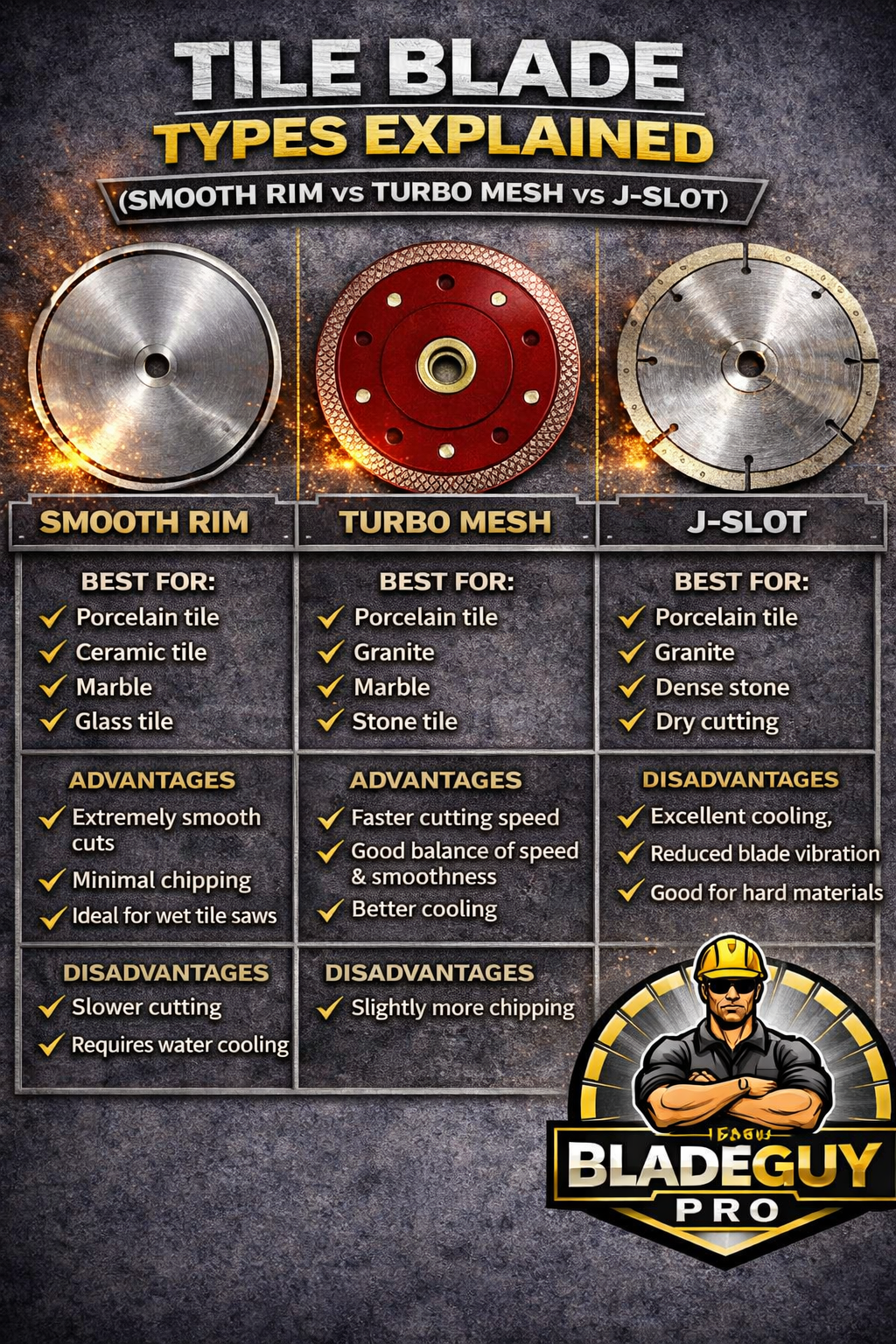
1. Smooth Rim Diamond Blades
Smooth rim blades are the most common tile blades.
They have a continuous rim with no segments or slots.
How They Work
The smooth rim creates constant contact with the tile, which reduces vibration and chipping.
Because of this design they produce the cleanest cuts possible.
Best For
• porcelain tile
• ceramic tile
• marble
• glass tile
• delicate materials
Advantages
✔ extremely smooth cuts
✔ minimal chipping
✔ ideal for wet tile saws
Disadvantages
• slower cutting speed
• requires water cooling
These blades are the standard blade for most tile saws.
2. Turbo Mesh Tile Blades
Turbo mesh blades are designed for faster cutting while still maintaining relatively clean edges.
Instead of a smooth rim, these blades have fine serrated turbo segments.
The turbo design helps move air and debris away from the cutting edge.
Best For
• porcelain tile
• granite
• marble
• stone tile
Advantages
✔ faster cutting speed
✔ better cooling
✔ good balance of speed and smoothness
Disadvantages
• slightly more chipping than smooth rim blades
Many contractors prefer turbo blades when cutting hard porcelain or stone tile.
3. J-Slot Tile Blades
J-slot blades are designed for maximum cooling and dust removal.
These blades feature laser-cut slots shaped like a “J” around the rim.
These slots improve airflow and help remove heat.
Best For
• porcelain tile
• granite
• dense stone
• dry cutting with grinders
Advantages
✔ excellent cooling
✔ reduced blade vibration
✔ good performance on hard materials
Disadvantages
• rougher cut edge than smooth rim blades
These blades are commonly used on angle grinders for tile cutting.
Tile Blade Comparison Chart
| Blade Type | Cutting Speed | Cut Quality | Cooling |
|---|---|---|---|
| Smooth Rim | Slow | Best | Moderate |
| Turbo Mesh | Medium | Very Good | Good |
| J-Slot | Fast | Good | Excellent |
Wet Cutting vs Dry Cutting Tile
Most tile blades perform best with water.
Wet Cutting Advantages
✔ cleaner cuts
✔ less dust
✔ longer blade life
✔ cooler blade temperature
Dry Cutting
Dry cutting is possible with turbo or J-slot blades but requires:
• lighter pressure
• cooling breaks
Common Tile Cutting Mistakes
Many tile problems are caused by blade selection.
Using a masonry blade on tile
This causes severe chipping.
Cutting too fast
Forcing the blade can crack tile.
Using dull blades
Dull blades cause vibration and edge damage.
BladeGuy Jobsite Tip
For extremely hard porcelain tile, use a high-quality porcelain-rated blade with a fine diamond grit.
Cheap blades often struggle with dense porcelain.
Final Thoughts
Tile cutting requires precision and the correct blade design.
Choosing the right blade ensures:
✔ smooth cuts
✔ less chipping
✔ faster installation
✔ longer blade life
Understanding these differences helps contractors achieve professional results.
BladeGuy Pro Authority Statement
BladeGuy Pro
After helping thousands of contractors over 40 years in the diamond tool industry, BladeGuy Pro shares real jobsite knowledge about diamond blades, cutting tools, and contractor techniques.

After 40+ years working with diamond tools, I built BladeGuyPro to help contractors solve real jobsite problems.
Visit bladeguypro.com/ for more guides on:
✔ Diamond blade troubleshooting
✔ Cutting techniques
✔ Tool selection charts
✔ Contractor safety tips