Few things slow down a jobsite faster than a diamond blade that suddenly stops cutting. One minute the blade is moving through concrete smoothly. The next, it feels like you’re pushing a dull piece of steel into the material.
Before throwing the blade away, it’s important to understand that most diamond blades stop cutting for a reason. Many times, the problem can be fixed in minutes.
Here are the most common causes and how contractors can fix them quickly.
1. The Blade Is Glazed
The most common reason a diamond blade stops cutting is glazing.
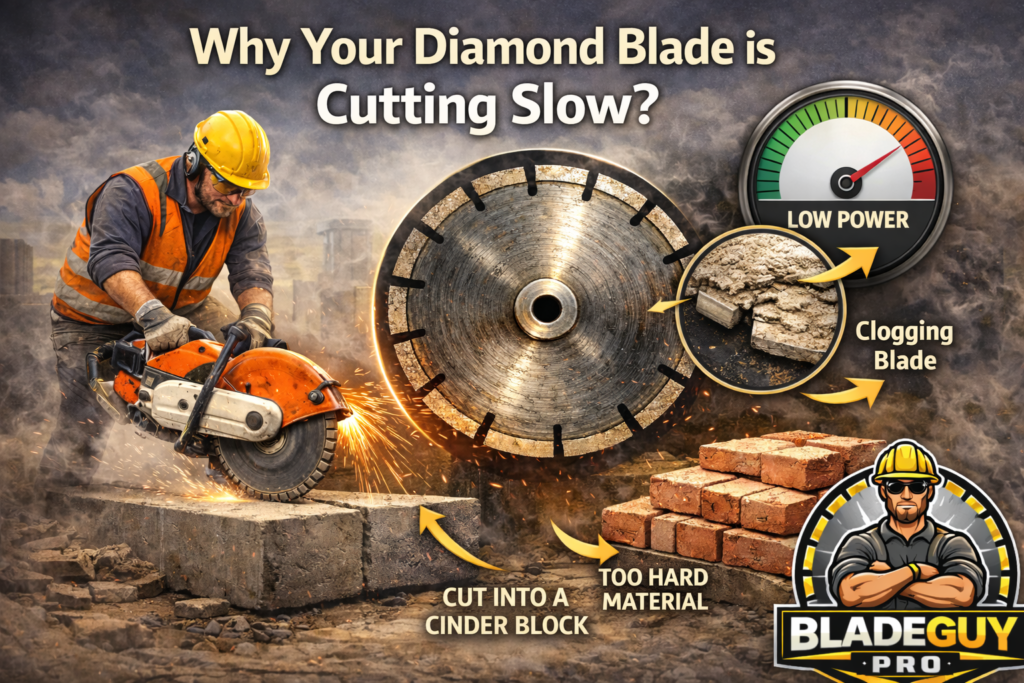
Diamond blades cut because the metal bond wears away during cutting and exposes fresh diamonds. If the bond does not wear properly, the diamonds become trapped inside the segment and the blade stops cutting efficiently.
Signs your blade is glazed:
- The blade cuts very slowly
- You need to push hard on the saw
- The segments look smooth or shiny
- The blade gets hot during cutting
Quick Fix
You can usually fix a glazed blade by dressing the blade.
Make several cuts into an abrasive material like:
- Concrete block
- Asphalt
- Soft brick
- Dressing stone
This wears away the bond and exposes new diamonds so the blade starts cutting again.
Most of the time this takes less than a minute.
2. You’re Using the Wrong Blade
Another major cause of slow cutting is using a blade designed for a different material.
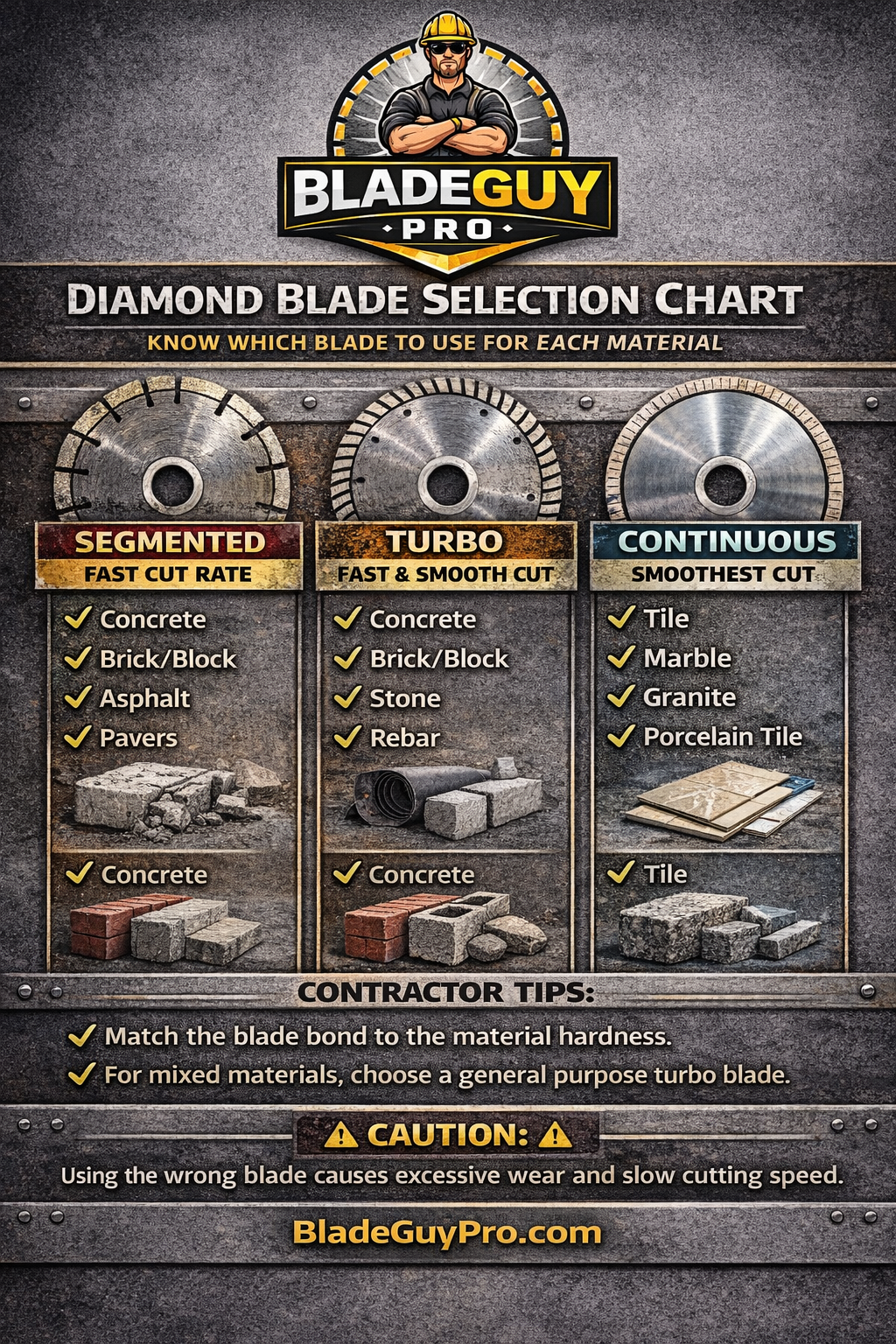
Different materials need different bond hardness.
Examples:
Concrete blades use a softer bond so diamonds expose quickly.
Asphalt blades use a harder bond because asphalt is highly abrasive.
If you use a hard bond blade on hard concrete, the bond will not wear fast enough. Thus, the blade will glaze.
The Solution
Always match the blade to the material you’re cutting:
- Asphalt → Asphalt blade
- Concrete → Concrete blade
- Reinforced concrete → Premium reinforced concrete blade
- Block or brick → Masonry blade
Using the correct blade can double your cutting speed and blade life.
3. You’re Forcing the Saw
Diamond blades work best when the operator lets the blade cut naturally.
If you push too hard:
- Heat builds up
- Diamonds dull faster
- Segments can glaze
- Blade life decreases
A properly matched blade should cut smoothly without excessive pressure.
If you have to force the saw, something is wrong with the blade or the material match.
4. The Blade Is Overheating
Heat is one of the biggest enemies of diamond blades.
Overheating can cause:
- Blade warping
- Diamond dulling
- Segment damage
- Slower cutting
Overheating often happens when:
- Cutting too deep at once
- Dry cutting continuously
- Using a dull or glazed blade
How to Fix It
Let the blade cool periodically and avoid forcing long deep cuts.
When possible, wet cutting helps keep the blade cool and reduces dust.
5. The Blade Is Actually Worn Out
Sometimes the blade really is worn out.
Signs of a worn-out blade include:
- Segments worn close to the steel core
- Very small segment height remaining
- Blade cuts slowly even after dressing
Once the segments are nearly gone, it’s time to replace the blade.
Continuing to run a worn blade can become unsafe.
Quick Jobsite Troubleshooting Checklist
If your diamond blade stops cutting, try this quick checklist:
- Inspect the segments for glazing
- Dress the blade with an abrasive material
- Confirm the blade is designed for the material
- Reduce cutting pressure
- Allow the blade to cool if overheated
In many cases, a blade that seems worn out can be restored in under a minute.
Final Thoughts
Diamond blades are incredibly durable tools. They rely on the proper balance between diamond exposure and bond wear to cut efficiently.
When a blade stops cutting, it usually doesn’t mean the blade is bad. It often means the blade simply needs to be dressed or matched to the correct material.
Understanding how diamond blades work can save contractors time, money, and frustration on the jobsite.

Leave a Reply