Want more contractor cutting tips? Subscribe to BladeGuyPro and get monthly Jobsite guides used by thousands of contractors. Email info@bladeguyPro.com and I will send you a printable monthly safety meeting crew flyer.
BladeGuy Pro
After helping thousands of contractors over 40 years in the diamond tool industry, BladeGuy Pro shares real jobsite knowledge about diamond blades, cutting tools, and contractor techniques.
Every week contractors ask why their $150 diamond blade suddenly stopped cutting, wore out in one job, or lost segments.
Diamond blades are incredibly tough — but they’re not indestructible.
Every week contractors ask why their $150 diamond blade suddenly stopped cutting, wore out in one job, or lost segments.
After 40+ years in the diamond tool industry helping thousands of contractors, I’ve seen the same blade killers over and over.
The truth is simple:
⚠️ Using the wrong blade for the wrong material will destroy it quickly.
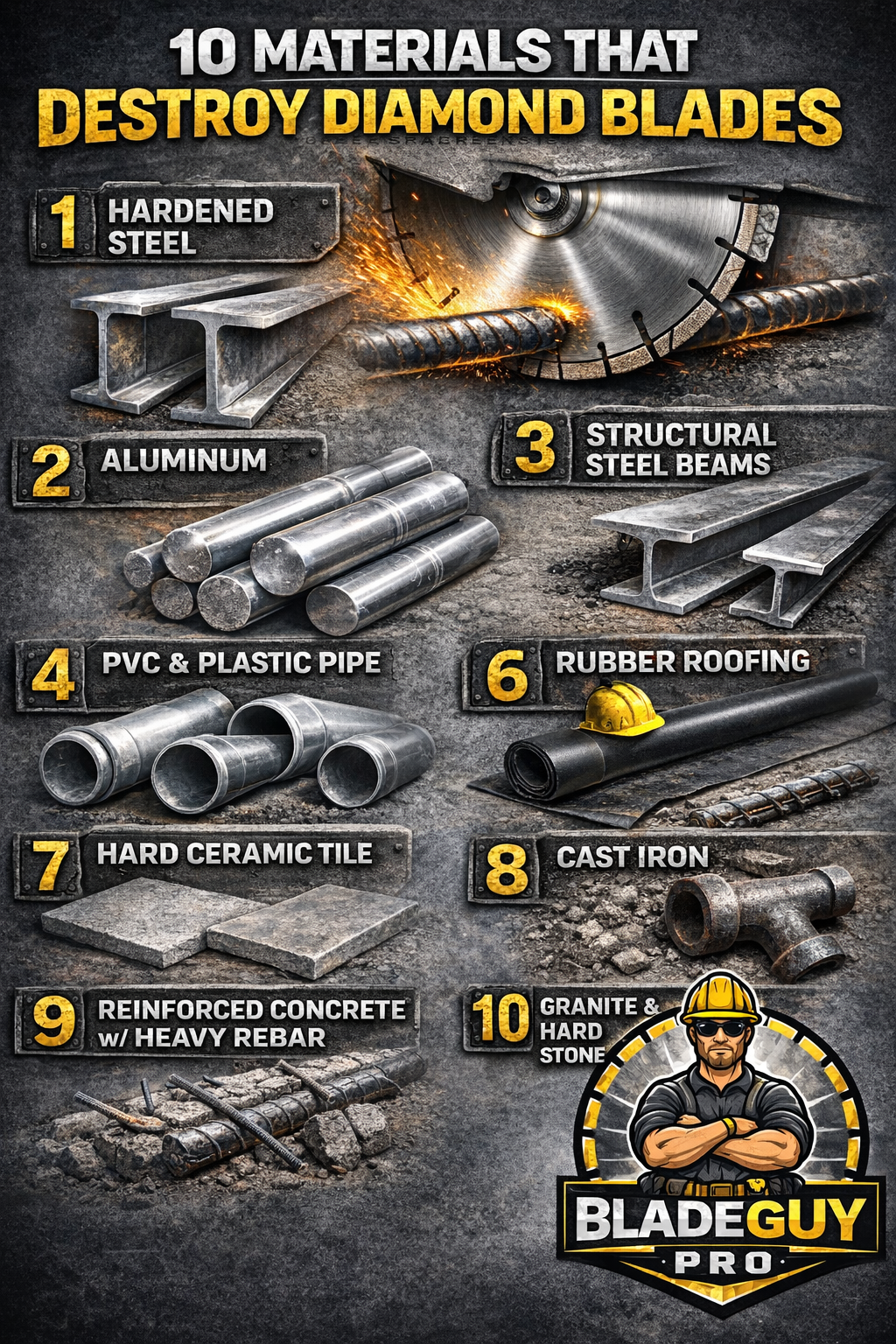
Here are the 10 materials most likely to destroy a diamond blade on the jobsite — and why it happens.
1. Hardened Steel
Steel is one of the fastest ways to destroy a diamond blade.
Diamond blades cut by grinding abrasive materials, but steel is not abrasive — it generates extreme heat.
What happens:
• Diamonds overheat
• Bond softens
• Diamonds pull out of the segment
Result:
⚠️ Rapid blade wear.
Diamond blades can hit rebar occasionally, but repeated steel cutting will kill a standard concrete blade.
2. Structural Steel Beams
Heavy steel such as beams or plates creates extreme friction.
Concrete blades are simply not designed to grind large amounts of steel.
Problems caused:
• Segment overheating
• Core warping
• Premature blade failure
This is why abrasive cutoff wheels or rescue blades are typically used for heavy steel cutting.
3. Aluminum
This surprises many contractors.
Aluminum is actually one of the worst materials for diamond blades.
Why?
Aluminum is soft and melts easily.
When cutting aluminum:
• Molten aluminum sticks to segments
• Diamonds get covered
• Blade stops cutting
This is called segment loading.
4. Copper
Copper behaves similarly to aluminum.
It quickly loads the blade segments and prevents the diamonds from cutting.
Symptoms include:
• Blade stops cutting
• Burning smell
• Excess heat buildup
Once the diamonds are coated with metal, the blade becomes useless.
5. PVC and Plastic Pipe
Plastic does not grind like concrete or stone.
Instead it melts.
When plastic melts:
• It sticks to the segments
• Diamonds get coated
• Blade becomes clogged
This causes the blade to stop cutting and overheat.
6. Rubber Roofing
Rubber roofing materials are extremely tough on diamond blades.
Rubber doesn’t grind — it grabs the blade.
Problems include:
• Blade binding
• Severe vibration
• Segment overheating
Rubber can also cause dangerous kickback when cutting.
7. Hard Ceramic Tile
Extremely dense porcelain and ceramic tiles can destroy a cheap blade.
These materials are extremely hard and require:
✔ fine diamond grit
✔ softer bond
✔ continuous rim blades
Using the wrong blade causes:
• slow cutting
• overheating
• rapid diamond loss
8. Cast Iron
Cast iron is extremely dense and generates intense heat.
While diamond blades can cut cast iron, standard concrete blades will wear quickly.
Blades designed for cast iron usually feature:
• reinforced cores
• special bond formulas
• heat-resistant segments
9. Reinforced Concrete With Heavy Rebar
Concrete itself is abrasive and ideal for diamond blades.
But when heavy rebar is present:
• heat spikes occur
• diamonds wear quickly
• segments may crack
Contractors cutting heavily reinforced concrete should use blades specifically designed for that application.
10. Granite and Ultra-Hard Stone
Granite is extremely dense and abrasive.
Using a blade designed for softer materials will cause:
• glazing
• overheating
• extremely slow cutting
Hard materials require softer bond blades so diamonds stay exposed.
The Real Reason Blades Fail
Most diamond blade failures come down to one thing:
Bond hardness.
Diamond blades are engineered with different bond types.
The rule is simple:
• Hard materials require softer bonds
• Soft materials require harder bonds
Using the wrong bond causes the blade to either:
• wear too fast
• glaze and stop cutting
BladeGuy Jobsite Tip
If your diamond blade suddenly stops cutting:
Cut into an abrasive material like asphalt block or sandstone for 30 seconds.
This exposes fresh diamonds and often restores cutting performance.
Contractors call this “dressing the blade.”
Final Thoughts
Diamond blades are designed for specific materials.
Using the right blade can mean the difference between:
✔ a blade that lasts weeks
or
⚠️ one destroyed in a single cut.
Understanding what materials damage diamond blades can save contractors time, money, and frustration on the jobsite.